Share
Australia's gender pay gap falls to record low 11.3%
08/18/2026
6 min
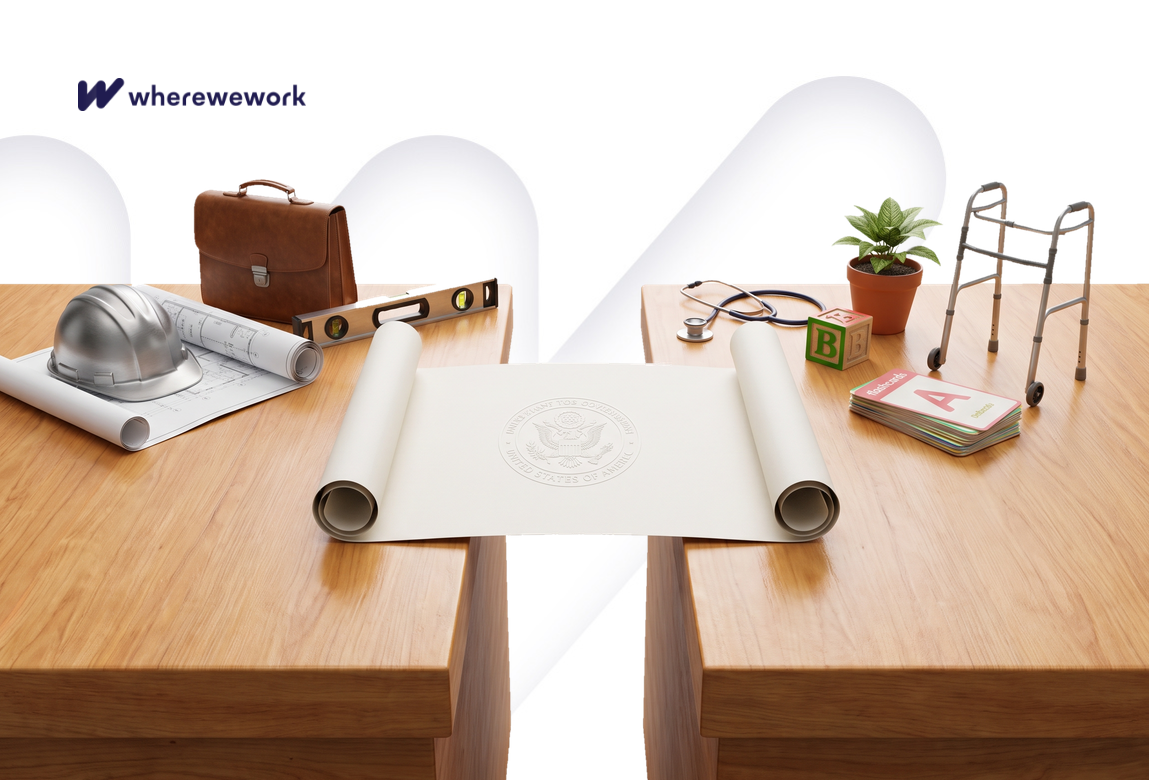
Australia's gender pay gap has dropped to 11.3% in May 2026, the lowest figure the Australian Bureau of Statistics (ABS) has recorded since it began measuring average weekly ordinary time earnings by sex. The number fell from 11.5% in November 2025, and while a 0.2 percentage-point move might look modest, the mechanism behind it carries a larger signal: the gap is not narrowing because women are negotiating better. It is narrowing because governments and the Fair Work Commission (FWC) raised wages in the sectors where women were already working.
The Workplace Gender Equality Agency (WGEA) set Equal Pay Day 2026 on 17 August, marking the 48 extra days the average Australian woman would need to work into the new year to match what the average man earned in the prior year. That date is today. The record low and the 48-day gap are both true at the same time.
What the numbers actually say
The ABS data on average weekly ordinary time earnings shows full-time adult male employees earning $2,181 per week and full-time adult female employees earning $1,934.50 per week. The 11.3% figure is the gap between those two amounts, expressed as a proportion of male earnings.
WGEA noted on its website that gender-based differences in earnings remain a reality in Australian workplaces, and that Equal Pay Day highlights that fact each year. The framing is useful because it holds both readings in the same sentence: Australia is at a historic best on the percentage measure, and women are still working roughly seven weeks a year for free relative to men on the time measure.
The ABS figure covers ordinary time earnings only. It does not capture total remuneration including bonuses, employer superannuation contributions beyond the Super Guarantee (SG, currently 11.5% and rising to 12% from July 2025), or overtime. The total-remuneration gap has historically been wider than the ordinary-time measure, so the 11.3% headline is the more flattering of the available cuts of the data.
The gap is closing because of policy, not persuasion
The Australian Council of Trade Unions (ACTU) attributes the narrowing gap primarily to wage gains in lower-paid, female-dominated occupations, particularly in aged care and health care, following sector-specific reforms that addressed the historical undervaluation of those roles. This is distinct from general wage growth: the FWC's work-value cases for aged care and early childhood education explicitly found that the work in those sectors had been chronically underpriced relative to comparable work, partly because it was performed predominantly by women.
Minister for Women Katy Gallagher listed the policy levers in a statement: tackling the gender pay gap from every angle, including delivering pay rises for minimum-wage workers, boosting wages in the early childhood education and aged care sectors, expanding Paid Parental Leave, and paying superannuation on Paid Parental Leave.
Each item on that list operates at a structural level. Minimum-wage rises flow through Modern Awards automatically, lifting the floor for the lowest-paid Award-covered workers. Superannuation on Paid Parental Leave changes the long-run retirement savings calculation for women who take leave at the birth or adoption of a child. None of these levers depend on an individual woman making a better case at a salary review. That distinction matters for both employees and employers thinking about where the remaining gap will be closed.
For employees
If your work sits in aged care, early childhood education, or allied health, your industry's baseline pay has shifted upward over the past two years and the employer-level market is still catching up to those FWC-driven changes. Two practical consequences follow.
First, do not use your own pay from eighteen months ago as the benchmark for your next salary conversation. Check your current rate against your Modern Award classification and against publicly available sector benchmarks. The work-value outcomes have moved Award minimums in some classifications by amounts large enough that an internal review anchored to last year's internal data may now be below market. Bring a role-comparable figure to the conversation, not just a percentage request.
Second, if you are weighing a move into one of these sectors, the pay maths genuinely looks different than it did two years ago. Occupation-level revaluation has shifted what entry-level and mid-career roles pay. The Australian HR Institute (AHRI) has noted growing employer competition for workers in these fields, which puts upward pressure on offers above the Award floor as well as at it.
For workers in other sectors, the broader takeaway is worth sitting with. Australia has run a real-world test of two theories of pay-gap closure: individual negotiation training versus structural pay-setting. On the available data, the structural levers moved the national number more visibly over the past two years than a decade of workplace-level behavioural programmes did.
For HR
If your organisation's pay-equity strategy still leans primarily on unconscious-bias workshops, negotiation coaching, and annual analytics reporting, the 2026 ABS result is worth taking seriously as a signal about where movement is actually coming from. Three shifts are worth putting to your next planning cycle.
- Audit by role architecture, not headcount ratio. A pay-gap figure driven by which jobs your female employees hold is a job-design and compensation-banding problem, not a recruitment problem. If women in your organisation are concentrated in roles that have been historically underpriced relative to comparable work, the fix sits with how you value those roles, not with hiring ratios.
- Track sector-wide Award movements, not just internal precedent. Where the FWC raises floors in specific occupations through work-value decisions or annual minimum-wage reviews, employer pay reviews that only look at internal year-on-year movement will drift below market. Aged care, early childhood education, and allied health are the clearest current examples. Price for those workers against the new external floor, not last year's internal median.
- Treat parental-leave design as a pay-equity lever, not a benefits perk. Paying superannuation on Paid Parental Leave (now a policy commitment at the federal level) changes the retirement savings trajectory for employees who take leave. Organisations that move ahead of the regulatory minimum on this get retention and recruitment upside; those that wait will be required to comply eventually and will have missed the reputational window.
WGEA described Equal Pay Day as an opportunity for employers to show leadership, demonstrate accountability, and communicate their commitment to workplace equality. For HR teams, leadership on this in 2026 means moving on compensation structure and job architecture, not on messaging campaigns.
WGEA's employer-reported gender pay gap data, submitted annually under the Workplace Gender Equality Act 2012, provides a more granular read than the ABS average. Employers covered by the Act can use their own WGEA scorecard figures to identify where within their organisation the gap is widest, which is a more actionable starting point than a national headline number.
The generational maths
ACTU president Michele O'Neil offered a specific timeline in her statement: at the current rate of progress, a girl born today could expect the gender pay gap to be eliminated by the time she is 16 years old and perhaps looking for her first job.
Sixteen years is a faster trajectory than the pre-reform period suggested. It is also not fast. And the trajectory assumption embedded in it is that the pace of improvement from the past two years continues. The past two years were driven by large, one-off occupational revaluation decisions in a small number of sectors. Once those sectors have been revalued, the remaining gap closes more slowly unless other sectors, and other employers operating above Award minimums, also move their pay structures.
That is where employer-side decisions do most of the remaining work: job architecture in professional and managerial roles, pay-band transparency, parental-leave design, and superannuation treatment during leave periods. The Productivity Commission and the e61 Institute have both published analysis suggesting that the unexplained portion of the gender pay gap, the share not accounted for by occupation or hours, is more persistent and harder to shift than the occupation-mix component that has driven recent progress.
Key takeaways
- Australia's gender pay gap dropped to 11.3% in May 2026, down from 11.5% in November 2025, the lowest figure the ABS has recorded. Men earned $2,181 per week full-time on average; women earned $1,934.50.
- The narrowing has been driven principally by FWC-backed wage rises in aged care, early childhood education, and health care, not by individual negotiation outcomes.
- WGEA set Equal Pay Day 2026 on 17 August, representing 48 extra days women would work to match men's prior-year earnings.
- For workers in care and health sectors, Award and market benchmarks have moved; internal pay reviews anchored to historical internal data may now be below the external rate.
- For HR leaders, the 2026 data shifts the case for pay-equity investment toward compensation design, job architecture, and parental-leave structure, away from behavioural training programmes.
- The Super Guarantee (SG) rising to 12% from July 2025, combined with the federal commitment to pay super on Paid Parental Leave, extends the gender pay-equity frame into retirement savings, not just current earnings.
Share
What I read is worth it:
Read all the articles about
Workforce planning Negotiation Economic Ethics Evaluate the company Employer branding Labour market Human behavior HR Metrics StatisticsArticle written by:
 wherewework.com
Comments
0 comments
No comments! Be the first to comment on this article!

Access your account and add your comment
Workforce planning


Subscribe to the Newsletter
Read articles of interest from wherewework.com contributors
