Share
Fair Work Commission sets Australia's first gig delivery pay floor
08/14/2026
6 min
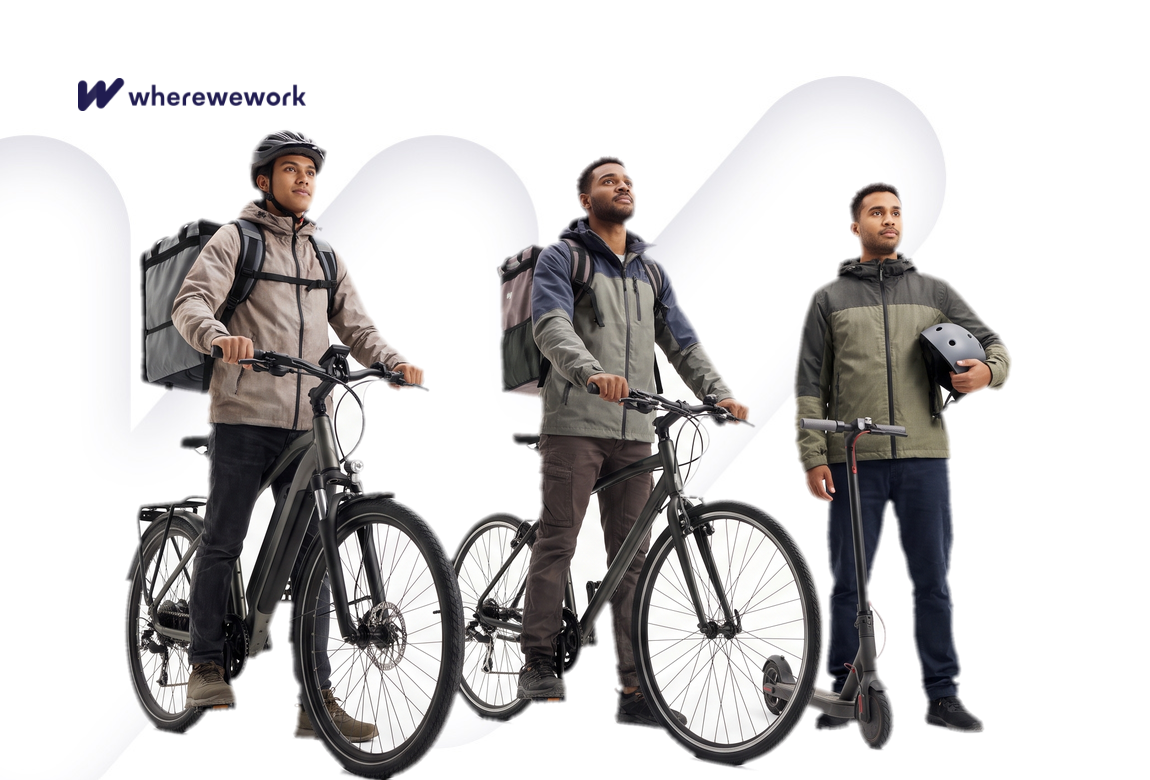
From Monday 18 August 2026, food delivery riders in Australia have a legally guaranteed pay floor for the first time. The Fair Work Commission (FWC) approved a minimum standards order covering on-demand food, drink, and grocery delivery workers, and the rates are specific: A$31.30 an hour of engaged time for bicycle and e-bike couriers, A$31.80 for motorcycle riders, and A$32.00 for car-based drivers. That is roughly US$22.05 or about £16.35 at recent conversion rates, and no national labour body anywhere has done this before without reclassifying gig workers as employees.
If you currently ride or drive for a delivery app in Australia, the change is direct and practical. If you are weighing up gig delivery work against other options, the new floor reshapes the maths. And if you follow labour policy at all, the Australian model is already being studied by regulators in the UK, across the EU, and in North America as a potential template for their own markets.
What actually changes from 18 August
The FWC order took effect on 17 August 2026, with the first full working day landing on Monday 18 August. The authority to make this order comes from the Albanese government's 2024 Closing Loopholes reforms, which amended the Fair Work Act 2009 to give the FWC new power to set legally enforceable minimum standards for "employee-like" platform workers. That legislative hook matters: without it, the FWC had no mechanism to reach into the gig economy at all.
Alongside the pay floor, the order introduces a workers' feedback forum so riders can raise concerns about platform operations, clearer dispute resolution pathways, and a right to unpaid time away from the app. Platforms are also now required to organise and fund personal accident insurance that provides what the FWC describes as a reasonable minimum level of cover for their workers. Compulsory third-party vehicle insurance, however, remains your own responsibility and cost - so read your platform's insurance summary carefully before assuming you are fully protected on the road.
The rates are also not locked in permanently. From 1 January 2027, every rate increases by 50 cents, moving bicycle and e-bike couriers to A$31.80 an hour of engaged time from the new year.
The catch: what counts as engaged time
Every rider needs to understand this before Monday. Engaged time is the window between accepting a delivery and completing it. The waiting period - when you are logged in, parked near a restaurant hotspot, watching the app for the next order - does not count toward the floor. If you spend an hour online but only 30 of those minutes fell between accepting and completing a job, the guaranteed rate applies to the 30 minutes, not the full hour.
There is a second wrinkle worth tracking. Platforms calculate your total earnings across a rolling 21-day period. If your engaged-time earnings across those three weeks average out below the floor, the platform tops you up at the end of that cycle. The top-up is not per shift or per hour; it is calculated across the full 21 days. In practice, a strong few days can offset a quieter stretch and still clear the threshold, which means one slow week does not automatically trigger a top-up. The onus is on you to track your own engaged hours if you want to check the platform's calculation.
Why this is not the same as being an employee
The Transport Workers' Union (TWU) agreed to classify delivery workers as employee-like rather than as employees as part of the deal. Tony Burke, who was Australia's Employment and Workplace Relations Minister when the framework was designed, explained the rationale this way: that for an employee, a whole series of rights exist, but for someone who is not an employee, all of those rights fall away at once - and the intent of the reform was to turn that abrupt cliff into a graduated ramp.
In practice, the ramp gives you a pay floor, mandatory accident insurance, and formal dispute rights. What it does not give you is paid annual leave, personal or carer's leave, superannuation contributions on the same footing as a permanent employee under the National Employment Standards (NES), or unfair dismissal protections in the conventional sense. You retain the flexibility to log on and off as you choose. The joint statement from the TWU, UberEats, and DoorDash described the outcome as providing an industry-wide safety net for hundreds of thousands of workers while preserving the flexibility that sits at the heart of on-demand work.
TWU national secretary Michael Kaine described the new standards as world-leading. Workplace Relations Minister Amanda Rishworth called the order a milestone, adding that food delivery workers should not have to trade off flexibility for fairer protections.
What it means if you deliver outside Australia
If you ride for a delivery platform in another country, nothing about your pay changes on Monday. What changes is the argument your own regulators can now make. The Australian precedent demonstrates that a national labour tribunal can set a legally enforceable hourly floor without reclassifying every gig worker as a staff member. That is the middle path several governments have been circling for years without committing to it.
A few things worth tracking in specific markets:
- UK. Existing case law already gives some platform riders "worker" status, which brings the National Minimum Wage into play. The Australian model of a delivery-specific hourly floor for engaged time sits between that and full employment, and could complement rather than conflict with existing UK case law.
- EU (including Ireland and the Netherlands). The EU Platform Work Directive establishes a presumption-of-employment framework. A minimum-standards order like Australia's is a distinct tool that could sit alongside it without triggering full reclassification.
- US and Canada. Rules vary heavily by state and province. New York City already caps app-based delivery worker pay. California's Proposition 22 went the other direction and locked in independent-contractor status with a lighter benefits package. The Australian model is closer in spirit to the New York approach than the Californian one.
- South Africa. Platform delivery work sits largely outside the Basic Conditions of Employment Act. Any intervention modelled on Australia's order would require new legislation, not just a regulatory ruling.
Will the price of your kebab go up
Platforms argued loudly during consultation that it would. Uber previously claimed the reforms could increase the average cost of a meal delivery by up to 85%. DoorDash went further, claiming average delivery prices could more than triple. The Centre for Independent Studies, a Sydney-based think tank, predicted consumer spending on the gig economy would shrink by A$630 million.
Whether any of that materialises is the real test case other regulators are watching. Deliveroo and Menulog have already exited the Australian market in recent years, leaving Uber Eats and DoorDash as the dominant players. Notably, those two platforms ultimately co-applied for these very standards alongside the TWU in 2024, which suggests both companies see a workable business at these rates. Amazon and Australia Post also made public submissions during the consultation process.
Safety, not just pay
The pay floor is the headline number, but the accident insurance and dispute rights carry as much practical weight for anyone who has been deactivated without explanation or injured mid-shift. The Transport Workers' Union counts at least 23 fatalities among gig workers in Australia since 2017. That figure is the human argument behind the order, and it is why insurance access was treated as a non-negotiable part of the package rather than an optional extra.
Wherever you deliver, treat this as a prompt to check three things about your current setup: what your platform's accident insurance actually covers (or excludes), how disputes and deactivations are handled in your platform's terms, and whether your own compulsory third-party motor insurance is current and valid. In Australia, those first two now carry regulatory teeth via the FWC. Outside Australia, they still depend entirely on your platform's own policies.
What comes next for gig workers in Australia
Separate FWC applications are already underway covering rideshare drivers and "last mile" parcel delivery workers. If those proceed through the same process, Australia could have a tiered minimum-standards floor across most of the platform economy by the end of 2027. The scaffolding built for food delivery - the engaged-time definitions, the 21-day averaging window, the top-up mechanics, the insurance obligation - becomes the template for those subsequent orders.
For gig workers reading this from outside Australia: the order does not raise your pay on Monday. What it does is make it considerably harder for platforms and governments in your market to maintain that a legally enforceable minimum standard for gig workers is structurally impossible. It has been done, the legal framework held, and the apps kept operating.
If you are weighing gig delivery work against a traditional role, or comparing platforms in your city, check what current riders and drivers actually report about pay, deactivation practices, and support. Real experiences from people who have done the work are a better guide than any sign-up page. The Fair Work Ombudsman (FWO) website also now carries guidance on the new standards, including how to raise a dispute if you think your platform has under-calculated your 21-day top-up.
Share
What I read is worth it:
Read all the articles about
About the crafts Balance Career planning Economic HR Metrics HR Coach Negotiation Statistics Workforce planning Labour market Job opportunitiesArticle written by:
 wherewework.com

Comments
0 comments
No comments! Be the first to comment on this article!

Access your account and add your comment
About the crafts


Subscribe to the Newsletter
Read articles of interest from wherewework.com contributors
