Share
Omaha's $15 teen wage floor tests Home Rule against the Nebraska AG
07/22/2026
7 min
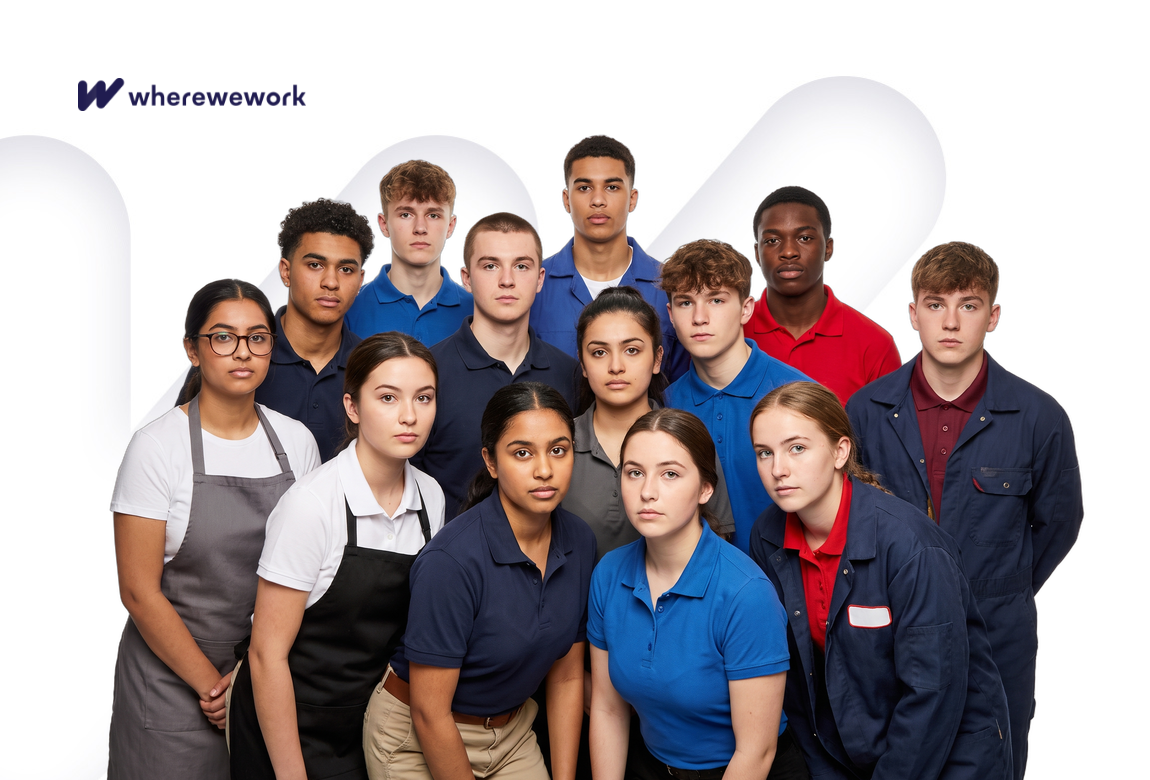
On July 21, 2026, Omaha Mayor John Ewing Jr. signed a city ordinance setting $15 an hour as the minimum wage for all workers inside city limits, including teenagers under 16. The move puts Omaha on a direct collision course with a Nebraska state law passed earlier in 2026 that permits employers to pay 14- and 15-year-olds $13.50 an hour and to pay a 90-day training wage of $13.50 to anyone under 19. The gap is $1.50 an hour. Over a 20-hour school-term week, that is $30 a week, or roughly $120 a month before tax, on the same job, in the same city, depending on which rate a court ultimately allows.
For teen workers and their families in Omaha, for HR managers running multi-location payrolls that include under-19s, and for city attorneys watching the Home Rule fight unfold in Nebraska's courts, this ordinance carries immediate, concrete stakes. Below is what it says, what the state has done to blunt it, and what the Lincoln injunction tells you about how durable any of this is.
What the Omaha ordinance actually does
The Omaha City Council approved the ordinance on a 4-3 vote the week before the signing. The ordinance takes effect October 1, 2026, and includes annual increases tied to a cost-of-living index. The headline rate is $15 an hour, applied uniformly across all workers regardless of age. There is no youth carve-out, no training-wage exception, no separate tier for 14- and 15-year-olds.
Nebraska voters originally approved a $15 minimum wage in 2022. Earlier in 2026, the Nebraska Legislature amended that framework: it removed the cost-of-living index mechanism and capped future statewide increases at 1.75% a year, and it added the lower rates for younger workers. Omaha's ordinance ignores both amendments and restores the original voter-approved wage floor within city limits.
The federal floor remains the Fair Labor Standards Act's (FLSA) general minimum of $7.25 an hour, which has not changed since 2009. The FLSA also contains a youth minimum wage provision under Section 6(g) allowing employers to pay workers under 20 a rate of $4.25 an hour for their first 90 days of employment, far below what Nebraska's state law sets and what Omaha's ordinance now requires. Omaha's ordinance supersedes both the federal youth rate and the state's newly carved-out lower tiers within city limits, provided it survives legal challenge.
Why the mayor signed it, in his own words
Mayor Ewing announced the decision in a statement shortly after delivering his budget proposal to the City Council. He grounded the argument in household economics rather than labor theory:
"My experience informed this decision because teenagers, even younger ones, often help supplement their family's overall income. I used my own teen wages to buy school clothes, which reduced the burden on my parents. This ordinance will help families. It is the right thing to do."
On the near-certain lawsuit, Ewing was direct. He stated he was confident the city can successfully argue for Omaha having its own minimum wage ordinance, pointing to the Home Rule Charter authority that Omaha's city attorney has said the state granted to cities like Omaha to address issues including a minimum wage.
For employees and teen workers: what changes on your payslip
If you work inside Omaha city limits, the ordinance sets your floor at $15 an hour starting October 1, 2026, regardless of age. That is a $1.50-an-hour advantage over the state-set rate for workers under 16 and for anyone in a 90-day training period under 19. The Bureau of Labor Statistics (BLS) consistently finds that teen workers are concentrated in food service, retail, and hospitality, exactly the sectors where training-wage carve-outs are most commonly applied. If you hold one of those jobs inside Omaha, the ordinance is worth real money.
A few practical points to keep in mind:
- The $15 rate is a floor, not a ceiling. If you were already earning above $15, nothing forces your rate down.
- The ordinance applies to work performed inside Omaha city limits. If you work across city and non-city locations for the same employer, the relevant rate depends on where the hours are clocked. Ask your employer to show that split on your pay stub.
- Because the ordinance faces a legal challenge in a parallel case in Lincoln (see below), keep your own record of hours worked and the rate paid. If a court issues an injunction, wage claims under the Fair Labor Standards Act are far easier to file when you have your own contemporaneous log.
- The ordinance does not affect federal FLSA enforcement directly. The Department of Labor (DOL) Wage and Hour Division enforces the federal floor, but state and municipal wage-and-hour claims are separate tracks. Know both, and know that your remedy under the FLSA and your remedy under the Omaha ordinance may run in parallel.
If you are negotiating a first job or a summer role that runs past October 1, the $15 floor is a useful reference point even before the ordinance takes effect. Most Omaha employers in retail and food service are already modeling internal pay bands around it. Use it as the baseline in any conversation about your starting rate.
The Lincoln precedent: an injunction, not a verdict
The reason Omaha's ordinance is not a settled matter is Lincoln. The Lincoln City Council adopted its own minimum wage ordinance in May 2026. Nebraska Attorney General Mike Hilgers filed a lawsuit against the City of Lincoln over that ordinance last month. On a Friday in July, a Lancaster County District Court judge granted a temporary injunction blocking Lincoln's measure, which had been set to take effect that Saturday.
Two details carry weight for anyone reading this as a signal for Omaha. First, Judge Lori Maret's order found that Attorney General Hilgers had standing to sue but did not rule on the merits of the case. The court has not decided whether Lincoln's ordinance is legal. It has only paused the ordinance while the litigation proceeds. Second, a spokeswoman for Attorney General Hilgers declined to comment on the Omaha signing, which leaves open, though it strongly implies, a parallel filing against Omaha.
The core legal question is Home Rule pre-emption. Omaha's city attorney has said Home Rule Charter cities were granted authority by the state to set a minimum wage. The Attorney General's position, as expressed in the Lincoln case, is that state statute pre-empts local ordinances that set a different floor. This is not a new tension in US labor law. Courts in Illinois, Missouri, and Washington state have all wrestled with the same pre-emption question when cities have set wage floors above state law. The Economic Policy Institute (EPI) has tracked more than two dozen pre-emption conflicts between state legislatures and city wage ordinances since 2017. The Nebraska pattern follows a now-familiar sequence: voters approve a wage floor, the legislature modifies it, and cities push back through Home Rule authority. How Lancaster County rules on the merits in Lincoln will move the ground in Omaha within weeks.
For HR and operators: compliance planning under legal uncertainty
If you run payroll for an Omaha restaurant, retail chain, quick-service outlet, or any operation that relies on teen and trainee labor, you are being asked to plan against two possible rates simultaneously. The prudent question is not which rate is correct. It is whether your payroll and scheduling systems can pivot within days of a court order, in either direction.
Structural moves worth considering before October 1:
- Model both scenarios in your labor budget. Run a version at $15 uniform and a version at $13.50 for under-16s and 90-day trainees under 19. The delta between them is your exposure if the ordinance holds, or your saving if it is enjoined. Senior finance and your HR leadership should see both numbers before the end of August.
- Tag hours by work location, not employee home address. The ordinance applies inside Omaha city limits. Multi-site operators with locations straddling the city boundary need location-tagged timekeeping records to defend any wage claim, under either the Omaha ordinance or the Nebraska state rate. The FLSA's record-keeping requirements under 29 CFR Part 516 set the minimum documentation standard; Omaha-specific claims may require more.
- Set your internal policy on the training-wage tier now. Even if the Nebraska state 90-day $13.50 training wage remains available elsewhere in the state, applying it inside Omaha for under-19s creates litigation exposure and reputational risk while the ordinance is in force. Many operators will standardize at $15 for administrative simplicity, separate from the legal question entirely.
- Prepare a plain-language communication for teen staff and their parents. Teen workers are a workforce segment where the paying adult in the household often reviews the pay stub. A clear, short explainer of what rate the employee is being paid, and why, reduces confusion and prevents the kind of local-media coverage that follows unexplained pay discrepancies.
- Track the Lincoln case docket weekly. The temporary injunction is not the end of the Lincoln story. A ruling on the merits, or an appeal, will shift the compliance picture for Omaha faster than a standard payroll cycle. Assign someone in HR or legal to monitor the docket directly.
The retention angle deserves direct attention. BLS data on teen employment consistently shows high turnover in food service and retail. In a local labor market where another operator down the street is paying $15 while a court case drags on, being the employer who held to the lower state rate becomes a recruiting liability that outlasts the litigation. Even if the ordinance is ultimately blocked, the reference point in the Omaha market will have shifted for the duration, and applicants will remember which employers paid which rate.
Why this matters beyond Omaha
Omaha is testing something narrower and more transferable than a $15 wage floor. It is testing whether a Home Rule city can protect a youth wage against a state legislature that has explicitly carved out a lower tier. That question is directly relevant in any US state where Home Rule cities exist and the state has moved to constrain local wage-setting. Illinois, California, and New York all have active preemption debates. Nebraska's outcome will be read by city attorneys and HR compliance teams well outside the state.
The Society for Human Resource Management (SHRM), which represents approximately 340,000 HR professionals across the country, has documented the compliance burden that multi-rate wage environments create for employers, particularly small and mid-size operators who lack dedicated legal staff to track shifting court orders mid-payroll-cycle. The Nebraska situation is a live version of exactly that problem.
Mayor Ewing stated plainly that after careful consideration, he signed the minimum wage ordinance into law. That careful consideration now transfers to the courts, to Nebraska's city attorneys, and to every Omaha operator writing a schedule for October. The Lincoln injunction tells you the fight is real. It does not tell you who wins.
Share
What I read is worth it:
Read all the articles about
International Students Legislative Motivation and vocation HR Metrics Economic Career planning Labour market Workforce planningArticle written by:
 wherewework.com

Comments
0 comments
No comments! Be the first to comment on this article!

Access your account and add your comment
International


Subscribe to the Newsletter
Read articles of interest from wherewework.com contributors
