Share
Minimum wage in South Africa 2027
11/11/2026
11 min
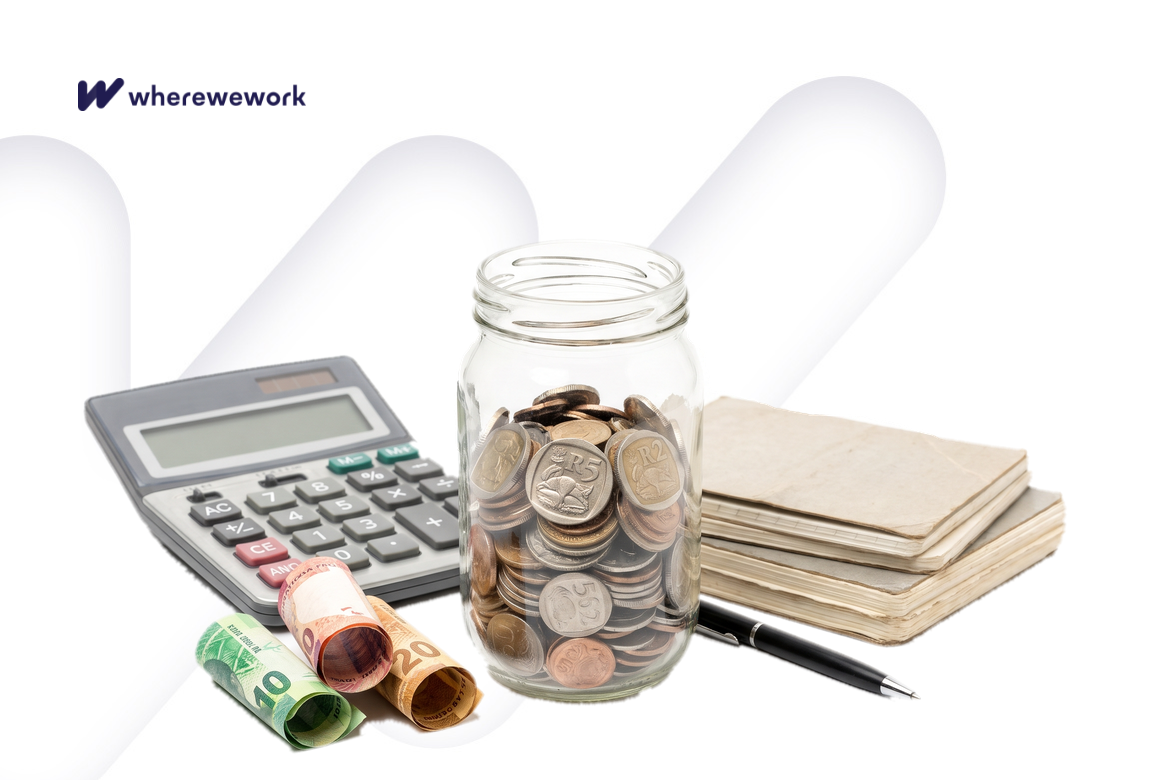
South Africa's national minimum wage sits at R30.23 per ordinary hour right now, and that number will not change until the Minister of Employment and Labour publishes a new Government Gazette notice, expected some time in February 2027. The Department of Employment and Labour estimates that roughly 5.5 million workers are on this rate, domestic workers and farm workers included. If you are one of them, this guide breaks down exactly what lands in your pocket, what your employer owes you, and what the competing 2027 proposals would mean for your pay slip.
1. The current minimum wage and who it covers
Under Schedule 1 of the National Minimum Wage Act 9 of 2018, as substituted by Government Notice R.7083 in Government Gazette 54075 dated 3 February 2026, the general rate is R30.23 for every ordinary hour worked, effective 1 March 2026. Farm workers and domestic workers receive the full rate. The definition of domestic worker is deliberately broad under Schedule 1: it covers gardeners, household drivers, and people who care for children, the elderly, the sick, the frail, or people with disabilities in a private household, as well as domestic workers placed through employment services.
A few groups sit outside the general rate:
- Expanded Public Works Programme (EPWP) workers: R16.62 an hour (up from R15.83 in 2025). That is 55% of the national floor, a gap that COSATU publicly criticised when the 2026 rate was announced, calling for an urgent roadmap to bring EPWP workers up to the full NMW.
- Learners on learnership agreements under the Skills Development Act 97 of 1998: weekly allowances set in Schedule 2 of the Act, ranging from R455.00 a week for learners with 0 to 120 credits up to R2,654.04 a week for NQF level 5 to 8 learners with 481 to 600 credits.
- Not covered at all: members of the South African National Defence Force, the National Intelligence Agency and the South African Secret Service, plus unpaid volunteers.
Only pay for actual work counts toward the R30.23 floor. Transport allowances, tools, food or accommodation allowances, payments in kind such as board or lodging, tips, bonuses and gifts cannot be counted to reach the minimum. Some sectors have their own higher floors set by sectoral determinations under the Basic Conditions of Employment Act 75 of 1997 (BCEA). Contract cleaning in Area A metros, for example, sits at R33.27 an hour from 1 March 2026, well above the national floor. If your sector has a determination that sets a higher rate, nothing can pull you below it, and nothing can pull you below R30.23 either.
The Department of Employment and Labour put the legal position plainly when the 2026 rate was announced:
The NMW is the floor which an employer is legally obligated to remunerate employees for work done. No employee shall be paid below the National Minimum Wage. It cannot be varied by contract, collective agreement or law; and it is also an unfair labour practice for an employer to unilaterally alter hours of work or other conditions of employment in implementing the NMW.
That protection is not theoretical. If your employer cuts your hours or changes your working conditions to absorb the increase without paying the new floor, that is an unfair labour practice you can refer to the Commission for Conciliation, Mediation and Arbitration (CCMA).
2. What R30.23 means in your pocket, and what it costs your employer
The Basic Conditions of Employment Act 75 of 1997 caps ordinary working hours at 45 a week under section 9, and section 35(3) of the same Act sets a monthly wage at four and one-third times the weekly wage. For a full 45-hour week at the minimum, the numbers stack up like this:
- Gross pay: R30.23 multiplied by 45 hours equals R1,360.35 a week, or R5,894.85 a month.
- Your UIF contribution (1%): R58.95 a month, deducted from your gross and paid to SARS via your employer.
- Net take-home: R5,835.90 a month.
- PAYE income tax: none. R5,894.85 a month adds up to R70,738.20 a year, comfortably below the R99,000 tax threshold for people under 65 in the 2027 SARS tax year (1 March 2026 to 28 February 2027).
Before 1 March 2026, the same 45-hour week at R28.79 paid R5,614.05 gross and R5,557.91 after UIF. The 2026 increase therefore added R280.80 to the gross line and R277.99 to your take-home pay each month. To sense-check your own pay slip, divide your gross monthly pay by your actual monthly hours (weekly hours multiplied by four and one-third). Unless you are on an EPWP project or a learnership, a result below R30.23 is a problem worth acting on.
There is also a four-hour minimum rule worth knowing: even if you work only one hour on a given day, the law requires your employer to pay you for a minimum of four hours.
On the employer side, one full-time minimum-wage worker costs R5,953.80 a month once the matching 1% UIF contribution is added, or R6,012.75 if the business is also liable for the 1% Skills Development Levy (SDL), which applies to employers whose annual payroll is expected to exceed R500,000. A household employing a domestic worker typically falls below the SDL threshold, so the cost stays at R5,953.80. An employer hiring a qualifying worker aged 18 to 29 (excluding domestic workers) may be able to reduce their PAYE bill by up to R1,203.86 a month through the Employment Tax Incentive for the first 12 months, based on the SARS amounts effective from 1 April 2025, though the continuation of those amounts depends on Parliament passing the necessary budget legislation. That incentive is a tax credit for the employer and does not change what you are paid.
Stats SA's Quarterly Employment Statistics for Q2 2026 put average monthly earnings in the formal non-agricultural sector at R30,611 in May 2026. The minimum-wage pay packet of R5,894.85 is about 19% of that average, a gap that underlines how far the floor sits from median formal-sector pay.
3. From R20 to R30.23: seven years of increases
South Africa introduced its national minimum wage on 1 January 2019 at R20.00 an hour, with lower starting floors of R18 for farm workers, R15 for domestic workers and R11 for EPWP workers. President Cyril Ramaphosa acknowledged at the time that R20 was well below what government wanted workers to earn. Every annual adjustment since then has been gazetted in February and applied from 1 March:
- 2020: R20.76 (up 3.8%)
- 2021: R21.69 (up 4.5%), farm workers aligned to full rate
- 2022: R23.19 (up 6.9%), domestic workers aligned to full rate alongside farm workers
- 2023: R25.42 (up 9.6%)
- 2024: R27.58 (up 8.5%)
- 2025: R28.79 (up 4.4%)
- 2026: R30.23 (up 5.0%)
Calculated from those gazetted rates, the general minimum is 51.2% higher than at its 2019 launch. The biggest gains went to the workers who started lowest: the farm-worker floor is up 67.9% from R18, and the domestic-worker floor has roughly doubled from R15, a rise of 101.5%. That progress matters, though it has to be read against rising food costs: the Pietermaritzburg Economic Justice and Dignity Group's August Household Affordability Index put the average household food basket at R5,479.80, rising to R5,655.03 in Johannesburg, and a nutritionally complete basket at R6,597.25. At R5,894.85 gross a month for 45 hours, the floor covers basic food costs for many households, but leaves almost no buffer.
If you already earn above the minimum, each upward adjustment is still worth watching. When the floor rises, the gap between entry-level and experienced pay can quietly compress, which is a useful piece of context if you are preparing for a salary conversation.
4. How the 2027 rate will be set
Under section 6 of the National Minimum Wage Act 9 of 2018, the National Minimum Wage Commission reviews the minimum wage every year and recommends an adjustment to the Minister of Employment and Labour, who publishes the final figure in the Government Gazette. The Commission has a chairperson, three members each nominated by organised business, organised labour and organised community, and three independent labour-market experts. The current Commission, appointed in early 2024, is chaired by Wits economist Professor Imraan Valodia, with Gavin Hartford of Stakeholder Solutions among the independent experts.
Under section 7 of the Act, the Commission weighs poverty alleviation and inequality against inflation, the cost of living, GDP, productivity, employers' ability to remain in business, the position of small and new enterprises, and the likely effect on jobs. In each of the last two cycles, the Commission recommended an increase of CPI plus 1.5 percentage points. For the 2026 increase, it specified that the inflation figure used would be the one available six weeks before 1 March, which is why no one can pin down the final 2027 rate in advance.
The 2027 timeline so far
- 5 August 2026: Government Gazette No. 55135 (Notice R.7772), signed by Gavin Hartford as Acting Chairperson of the Commission, opened the 2027 review and invited written representations.
- 4 September 2026: written submissions closed.
- Expected around mid-December 2026: the Commission's report and recommendation, based on the pattern of the last two cycles (18 December 2024 and 11 December 2025).
- Expected in February 2027: the Minister's notice in the Gazette (the last two notices appeared on 4 February 2025 and 3 February 2026).
- Expected 1 March 2027: the new rate applies, by established practice since 2020.
None of those expected dates is confirmed. The Commission's report and the Minister's decision are the two moments that actually fix the number.
Two positions in the debate
The Federation of Unions of South Africa (FEDUSA) submitted to the Commission that the minimum should rise from R30.23 to at least R33 an hour from 1 March 2027, an increase of approximately 9.2% or R2.77 per hour. FEDUSA's deputy general secretary, Ashley Benjamin, was direct on what that figure represents: R33 an hour is not a living wage but a step towards one.
On the day submissions closed, the lobby group Free SA called for increases to be halted, with spokesperson Gideon Joubert arguing that continuously raising the cost of employment risks keeping unemployed South Africans out of work. Both are positions submitted to the Commission, not decisions.
They land against an official unemployment rate of 33.6% in the second quarter of 2026, up from 32.7% in the first quarter, and annual consumer inflation of 4.5% in September 2026, both reported by Stats SA.
To illustrate the range of outcomes for a 45-hour week, here is what each scenario would mean for your pay (all figures are illustrations, not forecasts):
- Freeze (Free SA's position): R30.23 an hour, R5,894.85 gross, R5,835.90 net. Employer cost R5,953.80 to R6,012.75 a month.
- CPI plus 1.5 percentage points applied to September 2026 inflation of 4.5% (illustration only): about R32.04 an hour (6.0%), R6,247.80 gross, R6,185.32 net. Employer cost R6,310.28 to R6,372.76.
- FEDUSA's demand of R33: R6,435.00 gross, R6,370.65 net; employer cost R6,499.35 to R6,563.70. Even at R33, annual pay of R77,220 stays below the R99,000 SARS tax threshold, so UIF would remain your only deduction.
As a rough guide, every additional percentage point on R30.23 is worth about R0.30 an hour, or R58.95 a month on a full 45-hour week. The inflation figure the Commission actually uses will only be known in early 2027, so none of these middle numbers should be treated as a prediction.
5. The enforcement gap: when R30.23 is not what you receive
A legal floor only protects you if it is paid. Thembinkosi Mkalipi, Acting Deputy Director-General for Labour Policy and Industrial Relations at the Department of Employment and Labour, told SAnews in March 2026 that roughly 40% of employers are not complying with the minimum wage, and that this 40-60 split has held steady since 2019. In the State of the Nation Address on 12 February 2026, President Cyril Ramaphosa announced that an additional 10,000 labour inspectors would be hired in 2026, adding to the approximately 2,300 already nationwide.
Employers who genuinely cannot afford the rate can apply for an exemption under section 15 of the National Minimum Wage Act 9 of 2018, but Mkalipi noted that exemptions generally cannot take pay more than 10% below the minimum. Applications must be lodged through the online NMW system at nmw.labour.gov.za and require current financial statements.
Minister Nomakhosazana Meth has emphasised that enforcement in sectors where women are concentrated, including domestic work, agriculture, hospitality and retail, must remain a departmental priority. She also pointed to the broader context: official unemployment stood at 33.6% in Q2 2026, with women and young people carrying the heaviest share of that burden, while the rising cost of living erodes the value of every wage packet.
An employer who pays below R30.23 can be issued a compliance order under section 76A of the BCEA and faces a fine of the greater of twice the underpayment or twice the employee's monthly wage, rising to three times for repeat non-compliance. The Department publishes a quarterly list of employers issued with compliance orders on its website.
If you think you are being underpaid, here are practical steps:
- Divide your gross monthly pay by your actual monthly hours (weekly hours times four and one-third). Unless you are on an EPWP project or a learnership, a result below R30.23 means your employer is in breach.
- Confirm that allowances for transport, meals, accommodation or tools are not being counted toward the R30.23 minimum.
- Keep your pay slips and a record of your hours worked each day. You can report underpayment to Department of Employment and Labour inspectors or refer a dispute to the CCMA.
- Before starting domestic, farm, cleaning or hospitality work, check salary data for similar roles so you know what the market pays above the floor.
At a job interview, ask for the hourly rate and contracted weekly hours in writing, and ask directly whether any allowance, meal or accommodation counts as part of your pay. A clear written answer at that stage protects you from a dispute later.
R30.23 holds until the Minister decides: what to watch next
Until a new Government Gazette notice changes it, R30.23 an hour is the number to measure your pay against. That translates to R5,894.85 gross and R5,835.90 net for a full 45-hour week, with no PAYE liability for anyone earning only the minimum wage under the current SARS 2027 tax-year threshold of R99,000. The National Minimum Wage Commission's recommendation for 2027 is expected around mid-December 2026; the Minister's decision in the Gazette should follow in February 2027, with 1 March 2027 as the customary start date.
Research from the University of Cape Town's Development Policy Research Unit found no statistically significant employment-destruction effect in the first year of the NMW, and concluded similarly for the 2025 increase, though the researchers cautioned that the post-increase data covered only a short window. The Commission's stated medium-term aim is for workers to earn enough to maintain themselves and their families at a decent standard of living. Whether R30.23, R33 or something in between gets South Africa closer to that benchmark is the question the Commission will answer before the end of 2026.
If the 2027 review leaves your wage close to where it sits today, this may be a good moment to update your CV with the skills and responsibilities you have taken on since your last increase. And if you have reason to believe your employer is among the roughly 40% not complying with the current floor, checking open roles in your sector gives you both a benchmark and an option before you raise the issue internally.
Share
What I read is worth it:
Read all the articles about
About the crafts Balance Career planning Economic HR Metrics HR Coach Guide Labour market Negotiation Workforce planning Legislative Human behaviorArticle written by:
 wherewework.com

Comments
0 comments
No comments! Be the first to comment on this article!

Access your account and add your comment
About the crafts


Subscribe to the Newsletter
Read articles of interest from wherewework.com contributors
