Share
Minimum wage in Australia 2027
11/11/2026
14 min
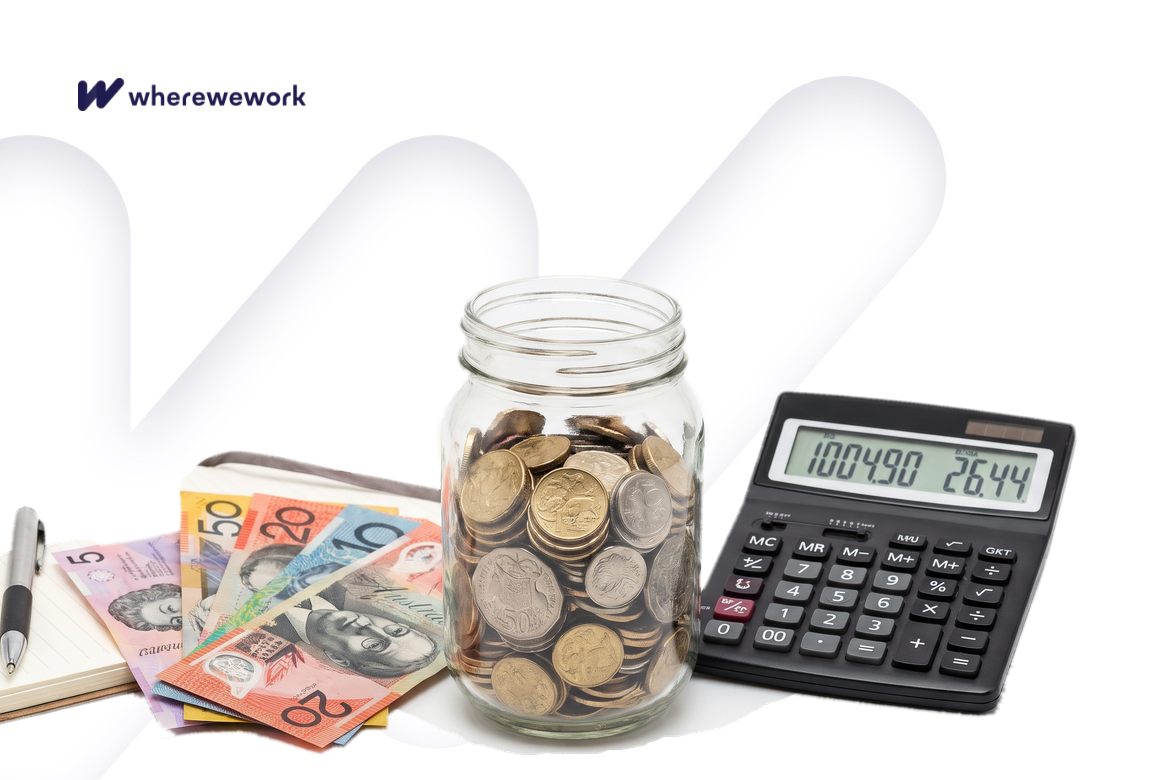
Australia's National Minimum Wage sits at $1,004.90 a week, or $26.44 an hour, and has applied since the first full pay period starting on or after 1 July 2026. That is a 6.0% lift on the previous $948.00 a week, the first time the floor has broken the $1,000 barrier, set by the Fair Work Commission (FWC) in its Annual Wage Review 2026 decision [2026] FWCFB 3500. Modern award minimum wages rose 4.75% in the same decision, and casual employees entitled to the national minimum now receive at least $33.05 an hour, which includes the 25% casual loading. The 2027 rate has not been decided: until the FWC's Annual Wage Review 2027 takes effect, the legal floor stays exactly where it is.
The headline figure is not where most of the money moves. The FWC's Expert Panel found that about 21.1% of all employees in Australia, almost 2.8 million people, are paid at an applicable modern award minimum rate, and those workers and their employers are the ones the annual review directly affects. The bare National Minimum Wage (NMW) covers a negligible share of the workforce; the Expert Panel itself noted that its practical effect is very limited. That distinction matters for how both workers and employers should read the numbers below.
This guide covers the current rates, what will change on 1 July 2027 regardless of what the FWC decides, what the Commission has signalled about the next step, and what each side of the employment relationship should do before that date.
1. The minimum wage now, and who it really covers
The $1,004.90 figure is calculated on a 38-ordinary-hour week and is the base rate for adult employees in the national system who are not covered by an award or enterprise agreement. Over a full year it comes to $52,254.80, up from $49,296.00 at the previous rate. Minister for Employment and Workplace Relations Amanda Rishworth confirmed the milestone: the decision means the National Minimum Wage is above $1,000 per week for the first time.
The FWC's Expert Panel was candid about how few people sit on that exact floor. As the Panel wrote in the Annual Wage Review 2026 announcement: its practical effect is very limited since only a negligible fraction of the workforce is actually paid in accordance with the National Minimum Wage. The real audience is award-reliant workers. Per the FWC, more than 60% of them are women, more than 70% work part-time hours, more than half are casuals and more than a third are low paid, yet their wages make up only about 11.2% of the national wage bill.
Four sectors account for over two-thirds of award-reliant employees: accommodation and food services, health care and social assistance, retail trade, and administrative and support services. If your workplace is a cafe, an aged care home, a supermarket or a call centre, your award rate is the number that matters.
How the floor compares with typical pay
According to the Australian Bureau of Statistics (ABS), average weekly earnings for all employees were $1,611 in May 2025 and median weekly earnings $1,436. Sean Crick, head of labour statistics at the ABS, noted that someone earning less than $878 a week was in the lowest-paid quarter of employees at that point.
The FWC defines low paid as two-thirds of median adult full-time weekly earnings: $1,164.67 a week on ABS Characteristics of Employment data (August 2025) and $1,234.67 on ABS Employee Earnings and Hours data (May 2025). A full-time adult on $1,004.90 earns 86.3% of the lower benchmark and 81.4% of the higher one, so remains low paid on both FWC measures. On an hourly threshold of $28.27, the FWC counts 35.9% of award-reliant employees as low paid.
Award minimums are a floor, not the going rate. ABS figures show only 23% of employees were paid according to an award in May 2025, while individual arrangements (38%) and collective agreements (35%) were more common methods of setting pay. If you are paid close to the minimum, checking how that rate compares with open roles in the same field is a useful starting point.
2. Ten years of minimum wage decisions
Under section 285 of the Fair Work Act 2009 (FW Act), the FWC must conduct and complete an annual wage review in each financial year and make a national minimum wage order. Here is how the weekly floor has moved over the past decade, with hourly rates in brackets:
- 2016: $672.70 ($17.70), up 2.4%
- 2017: $694.90 ($18.29), up 3.3%
- 2018: $719.20 ($18.93), up 3.5%
- 2019: $740.80 ($19.49), up 3.0%
- 2020: $753.80 ($19.84), up 1.75%, award increases staggered between July 2020 and February 2021 during the pandemic
- 2021: $772.60 ($20.33), up 2.5%, some award increases delayed to September and November 2021
- 2022: $812.60 ($21.38), up 5.2%
- 2023: $882.80 ($23.23), up 8.6%, the largest rise of the decade
- 2024: $915.90 ($24.10), up 3.75%
- 2025: $948.00 ($24.95), up 3.5%
- 2026: $1,004.90 ($26.44), up 6.0%
Across the decade, the weekly minimum rose by $332.20, or 49.4%. The 2023 percentage is computed from the published weekly rates: $70.20 / $812.60 = 8.6%.
Why the minimum rose 6.0% when awards rose 4.75%
Since the 2023 Review, the NMW has been aligned with the lowest ongoing classification rate in modern awards, known as C13. Because C13 ($948.00) sat about 3.6% below the next level, C12 ($982.40), the FWC decided to phase it out in three stages of about 1.2% each. Stage one, in 2026, compounded that 1.2% on top of the 4.75% general increase: $948.00 x 1.0475 x 1.012 = $1,004.95, set at $1,004.90 a week. The FWC estimates this structural adjustment of the two lowest award rates affects around 100,000 of the lowest-paid employees.
3. Gross, net and employer cost: the weekly maths
Take a full-time adult on the NMW, working a full year, an Australian tax resident with no study loan debt and paying the full 2% Medicare levy. Using the 2026/27 income tax rates published by the Australian Taxation Office (ATO), 15% on income from $18,201 to $45,000, 30% above that, plus the low income tax offset, the numbers work out as follows:
- Before 1 July 2026: $948.00 gross a week, about $826.80 net under 2025/26 rates.
- Now: $1,004.90 gross a week, about $869.80 net under 2026/27 rates.
- Difference: $56.90 more gross, about $43 more net a week. Part of that net gain comes from the lowest tax rate falling from 16% to 15% on 1 July 2026, not from the wage rise alone.
On the employer side, the same week costs $1,125.49 once the 12% superannuation guarantee (SG) is added ($120.59 a week), or about $58,525 a year. That is before state or territory payroll tax, which applies only once total payroll crosses the local threshold, and workers' compensation premiums, which are set by state schemes and vary by industry. A casual on the national minimum costs about $37.02 an hour including super.
Cash flow has also changed for employers. Under the Payday Super rules in force since 1 July 2026, the 12% SG contribution is due every payday rather than quarterly, so contributions must reach the employee's super fund within 7 business days after each pay run. A small business can no longer hold that money for up to three months. For employers managing multiple minimum-wage employees, the cumulative difference in timing is material.
If you are on an award rather than the bare NMW, your personal numbers will differ. The simplest check is to start from the gross salary on your payslip, work out your net for the current tax year, and compare it with what landed in your account in June 2026.
4. The tax changes that lift take-home pay without a wage rise
Two sets of ATO measures change what you keep in the 2026/27 and 2027/28 years, whatever the FWC decides about wages.
The $1,000 standard deduction, from 2026/27
The ATO has confirmed that a $1,000 standard deduction for work-related expenses applies from the 2026/27 income year and does not apply to 2025/26 tax returns. It is an option to claim a flat $1,000 without keeping receipts. For a full-time minimum wage earner, whose effective marginal rate is about 33.5% (30% tax, 2% Medicare levy and 1.5% from the phasing out of the low income tax offset), this is worth up to $335. That arrives as a lower tax bill when you lodge after 30 June 2027, not in your weekly pay.
From 1 July 2027: a 14% rate and a $250 offset
On 1 July 2027 the rate on income between $18,201 and $45,000 falls again, from 15% to 14%, now law. For anyone earning above $45,000, including a full-time minimum wage worker, that is worth $268 a year. The same date brings the new $250 Working Australians Tax Offset (WATO), which the ATO confirms applies to income earned from work from 1 July 2027 and is delivered automatically through the 2027/28 tax return. Together those two measures are about $518 a year, or roughly $10 a week, before any wage rise from the FWC.
Two scenarios for July 2027
Because the 2027 wage figure does not exist yet, here is the arithmetic rather than a forecast, measured on today's $1,004.90 base:
- If the Expert Panel awards only a general increase: every 1% adds about $10.05 a week gross, or roughly $6.70 net at a 33.5% marginal rate, on top of the $518 a year from tax changes.
- If stage two of the C13 phase-out goes ahead: the lowest rate gets roughly another 1.2% compounded on top of the general increase, about $12.06 a week gross more than the first scenario, or around $8 net.
5. Award rates, casuals, entry-level and Western Australia
Most workers near the bottom of the pay scale are covered by a modern award, not the bare NMW. Since 1 July 2026, any award rate for ongoing employment must be at least $1,004.90 a week, and any entry-level rate applying for the first six months or less must be at least $978.10 a week ($25.74 an hour). A worker classified at Retail level 1 under the General Retail Industry Award [MA000004], for example, is on $1,056.80 a week, $51.90 above the NMW floor. Casual employees add the 25% loading on top of the relevant award rate.
Juniors, trainees, apprentices and employees with a disability have their own rate schedules, so the relevant figure is the one that matches your age, year of apprenticeship or assessed capacity. A pending change also applies to 18- to 20-year-olds in the retail, fast food and pharmacy awards: the FWC decided on 31 March 2026 that adult junior employees with more than six months' experience with their employer will be entitled to 100% of the full adult rate. The FWO's guidance, published 8 April 2026, notes the changes could start from 1 December 2026, subject to further hearings on timing, with final changes from 1 July 2029.
Western Australia operates a separate state industrial relations system for some employers. Its state-system minimum, set by the WA Industrial Relations Commission (WAIRC), is $998.30 a week, a 4.75% rise from the WAIRC's 2026 State Wage Case, which now sits $6.60 a week below the national figure because the FWC applied an additional structural increase for the lowest-paid classifications. If you work in WA, the first question is whether your employer falls under the national system (most incorporated businesses do) or the state system (sole traders, unincorporated partnerships and certain not-for-profits). Simone McGurk, Western Australian Minister for Industrial Relations, welcomed the WAIRC decision, acknowledging that the lowest-paid workers are most impacted by cost-of-living pressures.
Private-sector employees covered by WA's state system make up as much as 20% of the Western Australian workforce, so the distinction is not academic for a significant slice of that state's labour market.
6. What the Commission has signalled for 1 July 2027
At the time of publication in November 2026, the FWC's annual wage reviews page still listed the 2026 Review as the most recent: no 2027 figure has been set. Each year an Expert Panel, the President, three other full-time members and three part-time members, typically runs the review from March to June. Over the past decade, decisions have landed between 30 May and mid-June, and under section 287 of the FW Act the new order takes effect from the first full pay period starting on or after 1 July.
On the next stages of the C13 phase-out, the 2026 decision stopped short of a promise. The Expert Panel stated:
Desirably, the second and third stages may be implemented in the next two Reviews, but that will ultimately be a matter for the Expert Panels ... that conduct those Reviews to determine.
The Panel also said in the Annual Wage Review 2026 decision [2026] FWCFB 3500 that it had concluded, regrettably, that it would not be practicable or responsible in the current uncertain circumstances to award a real wage increase for employees reliant on modern award wage rates sufficient to close the real wage gap entirely. It added that if the Reserve Bank of Australia (RBA) and Budget inflation forecasts for 2026/27 hold, the 2027 Review will have an opportunity to close that gap completely. That is a signal, not a commitment.
The reactions to the 2026 decision outline the arguments that will return next year. Treasurer Jim Chalmers, quoted by SBS News, said the increase is a real wage rise and, in the government's view, sustainable. Sally McManus, Secretary of the Australian Council of Trade Unions (ACTU), acknowledged the direction while noting the pace: the Commission wants to close the gap, just not as fast as workers' advocates want to get there.
7. What to do before 1 July 2027
For employees
Start with your payslip. Check which award and classification level you are paid under, and if you are casual, confirm you are getting at least $33.05 an hour or the casual rate for your award level. If your duties have grown beyond your current classification, that is worth documenting, classification under modern awards generally follows the work you actually do, and the difference between adjacent levels can be $50 or more a week.
If your employer pays exactly the award floor and your role has moved on, looking at open roles in your sector is a useful signal of what the market is offering above that floor. At your next interview, asking which award and classification level a role sits at, and whether the rate on offer tracks the floor each July or is set above it, gives you a clearer basis for comparison than a job ad that uses only an annual salary figure.
For HR and employers
Anna Booth, the Fair Work Ombudsman (FWO), put the obligation plainly: employers must apply the new minimum wage from the first full pay period on or after 1 July to eligible employees. Payroll systems need the new rates loaded before that pay run, and award classifications checked so nobody slips below the new floor. The FWO's pay guides, updated after each Annual Wage Review, are the fastest way to verify the correct rate for each award and classification.
For budgeting, the scenario arithmetic translates directly into cost. At today's base, every 1% general increase adds about $11.26 a week per minimum-rate employee including 12% SG, and stage two of the C13 phase-out would add roughly $13.51 a week more. Payroll tax and workers' compensation premiums, both calculated on wages, rise with any increase. And under Payday Super, that SG leaves the account every payday, so modelling cash flow by pay cycle rather than by quarter is now the more accurate approach.
Employer groups flagged the cumulative load in 2026. Innes Willox, chief executive of the Australian Industry Group (Ai Group), noted that businesses simply do not have an endless capacity to absorb costs, including wage increases, without passing them on to consumers or fundamentally changing how they work, including the composition of their workforce. David Alexander, policy chief at the Australian Chamber of Commerce and Industry (ACCI), said for some businesses the 2026 increase could be the tipping point. Preparing two budgets for 2027, one with stage two of the C13 phase-out and one without, is a more defensible plan than a single assumption.
The wider signal: what 1 July 2027 looks like from here
Until the Annual Wage Review 2027 decision, expected around early June 2027 based on past decision dates, Australia's minimum wage stays at $1,004.90 a week, $26.44 an hour and $33.05 for casuals. What is certain for 1 July 2027 regardless of the wage outcome is the 14% tax rate and the $250 WATO, together worth about $518 a year to a full-time minimum wage earner. What is signalled, but not yet promised, is stage two of the C13 phase-out and the possibility of closing the real wage gap that opened during the post-pandemic inflation period. When the FWC publishes the new rate, a salary comparison benchmarked against real employee data will show within minutes what it means for your own pay or your wage line.
FAQ
What is the minimum wage in Australia right now?
$1,004.90 per 38-hour week, or $26.44 an hour, from the first full pay period on or after 1 July 2026. Casual employees entitled to the national minimum get at least $33.05 an hour including the 25% loading.
Has the 2027 minimum wage been set?
No. The Fair Work Commission (FWC) typically decides in late May or June each year, and the new rate applies from the first full pay period on or after 1 July 2027 under section 287 of the Fair Work Act 2009.
How much is the minimum wage after tax?
For a full-time adult resident paying the full Medicare levy, about $869.80 a week in 2026/27, up from about $826.80 before 1 July 2026.
What does a minimum wage employee cost an employer?
$1,125.49 a week including 12% super guarantee, before state or territory payroll tax (where the payroll threshold is exceeded) and workers' compensation premiums.
Why did the minimum wage rise more than award wages in 2026?
The NMW is aligned with the lowest award rate, C13, which the FWC is phasing out in three stages of about 1.2% each. Stage one added that 1.2% compounded to the 4.75% general increase, giving 6.0%.
Share
What I read is worth it:
Read all the articles about
HR Metrics HR Coach Guide Career planning Editorial Human behavior Labour market Legislative Workforce planning NegotiationArticle written by:
 wherewework.com
Comments
0 comments
No comments! Be the first to comment on this article!

Access your account and add your comment
HR Metrics


Subscribe to the Newsletter
Read articles of interest from wherewework.com contributors
