Share
Canada minimum wages 2027: PEI confirmed, federal rate still pending
10/27/2026
13 min
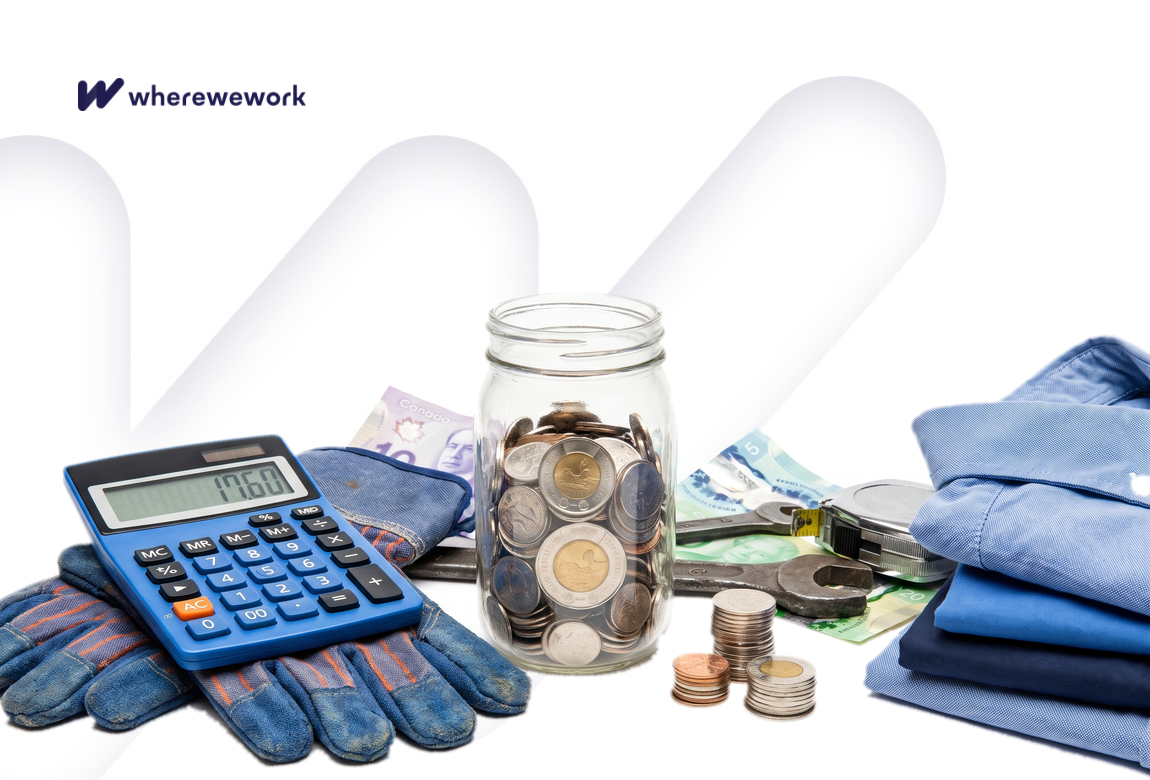
Prince Edward Island's minimum wage will rise to $17.60 an hour on 1 April 2027, up from $17.30 (+1.73%) - and as of late October 2026, that is the only 2027 rate officially confirmed anywhere in the country. Every other rate, including the federal floor of $18.15 that covers roughly 1.0 million employees at federally regulated private-sector employers, remains tied to 2026 inflation data that Statistics Canada / Statistique Canada has not yet fully published. All dollar figures in this article are Canadian.
For most workers, the size of next year's raise is genuinely unknown. HR teams and small employers building 2027 payroll budgets are working from scenarios rather than confirmed numbers. One change is already locked in for nearly every payslip outside Quebec: on 1 January 2027, the base Canada Pension Plan (CPP) contribution rate drops from 4.95% to 4.75% for both employees and employers alike. That is a real, calculable improvement to take-home pay that does not depend on any provincial or federal announcement.
Below is a dated calendar of who gets a new minimum wage and when, what a full-time minimum-wage job pays today in gross and net terms, what it costs the employer, and the special rates that apply to students, tipped workers and other groups.
1. The 2027 calendar: who gets a new rate, and when
Canada has no single minimum wage. Employment and Social Development Canada (ESDC - Emploi et Développement social Canada) sets a federal floor for federally regulated private-sector employers, and each province and territory sets its own general minimum for the roughly 94% of workers outside that sector. Most jurisdictions now index their rates to inflation, which makes the change dates predictable even when the actual amounts are not yet known.
- 1 January 2027: the base CPP rate falls from 4.95% to 4.75% for employees and employers. Workers in Quebec contribute to the Quebec Pension Plan (QPP) rather than CPP and are not covered by this change.
- 1 April 2027: the federal minimum wage is adjusted to 2026 average inflation and Prince Edward Island moves to $17.60. Nova Scotia, New Brunswick, Newfoundland and Labrador and Yukon also adjust on this date; none had published a 2027 figure by late October 2026.
- 1 May 2027: Quebec, currently at $16.60 since 1 May 2026. May 1 has been Quebec's annual minimum wage change date since 2003.
- 1 June 2027: British Columbia, currently at $18.25, under its annual increases tied to B.C.'s all-items Consumer Price Index.
- 1 September 2027: Northwest Territories and Nunavut, the latter now using an indexation formula combining the Iqaluit CPI and Nunavut's average hourly wage.
- 1 October 2027: Ontario ($17.95 today), Manitoba ($16.40) and Saskatchewan ($15.70). Ontario's October rate must be published on or before 1 April 2027 under section 23.1(4) of the Employment Standards Act, 2000, S.O. 2000, c. 41 (ESA). Manitoba must publish before 1 April 2027 under section 7(1) of The Employment Standards Code, S.M. 1998, c. 29. Saskatchewan normally announces by 30 June 2027.
- No scheduled change: Alberta, unchanged at $15.00 since October 2018.
Some of the publication deadlines are worth tracking. PEI's rate rose from $17.00 to $17.30 on 1 October 2026, confirmed by Gowling WLG's table of rate changes, and PEI has no indexation formula - its Employment Standards Board sets the rate based on a range of factors. New Brunswick ran its first public consultation on the minimum wage in a decade, which closed on 9 October 2026, examining not just the amount but how it is determined and the timeline for changes - meaning the method behind the April 2027 rate could shift. Nova Scotia has been raising its rate twice a year (reaching $17.00 on 1 October 2026), a rhythm the Canadian Federation of Independent Business (CFIB - Fédération canadienne de l'entreprise indépendante) has criticised.
Frédéric Gionet, CFIB's Atlantic Director, put the small-business concern directly when commenting on PEI's October increase:
Businesses need a system that is predictable and tied to what is actually happening with wages in the Island economy, rather than a series of increases that continually reset their payroll costs.
Louis-Philippe Gauthier, CFIB's Atlantic vice-president of Advocacy, added a sharper warning about Nova Scotia specifically, noting that if the province does not stop its twice-a-year increases, it risks pushing its minimum-wage-to-median-wage ratio toward levels seen in countries such as Colombia, Costa Rica, Chile and Mexico.
2. The federal floor: $18.15 now, and what 1 April 2027 could bring
The federal minimum wage rose to $18.15 an hour on 1 April 2026, as announced by ESDC on 24 March 2026 - a cumulative gain of 21% since the standalone federal rate was introduced in 2021. It applies to the federally regulated private sector: interprovincial and international transport, telecommunications, banking, uranium mining, most federal Crown corporations, grain services and Indigenous band councils. In 2024, that sector counted 18,500 employers and 1.0 million employees, 5.8% of Canada's workforce, according to ESDC's Labour Program in Brief. The rate also covers interns and employees under 18.
Where a province's general minimum is higher, the federally regulated employer must pay the higher rate. Where a province sets age-based minimum rates, the highest of those rates applies - a protection written into the Canada Labour Code, section 178(2)-(3). Patty Hajdu, Minister of Jobs and Families, described the purpose this way:
Ensuring the federal minimum wage rises with inflation is a floor that protects workers, especially those in the lowest paid jobs in federally regulated sectors.
The 2027 rate follows a fixed formula under Canada Labour Code, section 178.1(2): each 1 April, the previous rate is multiplied by the change in Canada's annual average all-items Consumer Price Index (CPI), not seasonally adjusted, as published by Statistics Canada, then rounded up to the nearest $0.05. Under section 178.1(4), the rate can never go down. The formula uses the average of all monthly CPI readings for the preceding calendar year under section 178.1(3), which means the October to December 2026 data are still needed before the figure can be calculated. Statistics Canada put year-over-year inflation at 3.0% in August and 3.1% in September 2026.
For planning purposes only - these are not official figures: a 2026 average CPI increase of 2.5% would lift the federal rate to $18.65, an increase of 3.0% would give $18.70, and an increase of 3.25% would give $18.75. Over 2,080 hours a year, each 5-cent step adds $104 to gross annual pay.
The gap between the federal floor and Alberta's frozen $15.00 provincial rate is particularly significant. A federally regulated employee in Alberta earns at least $18.15 - that is $3.15 an hour more than a colleague on the provincial rate, or $6,552 a year on a 40-hour week. If you live in a province with a low general minimum and you are browsing open roles, positions with banks, telecom carriers or interprovincial transport companies carry the federal floor as a built-in benefit. At an interview with a federally regulated employer, it is worth asking which minimum the offer is pegged to and whether pay is reviewed automatically each 1 April when the federal rate moves.
3. How we got here: a short history
The standalone federal minimum wage is a recent development. Until 29 December 2021, the Canada Labour Code simply applied the general minimum of the province where the employee usually worked. The new $15.00 rate, proposed in Budget 2021 and introduced with Royal Assent to the Budget Implementation Act, 2021, No. 1, has risen every April since: $15.55 in 2022 (+3.7%), $16.65 in 2023 (+7.1%), $17.30 in 2024 (+3.9%), $17.75 in 2025 (+2.6%) and $18.15 in 2026 (+2.25%). That adds up to 21% in just over four years. When the rate was introduced ESDC expected about 26,000 employees to get a raise; the 2024 increase reached approximately 30,000.
The provincial picture tells a similar story. Ontario's general minimum wage moved from $16.55 (October 2023) to $17.20 (October 2024), $17.60 (October 2025) and $17.95 (October 2026). Manitoba climbed from $13.50 in October 2022 to $16.40 in October 2026, with an extra April step in 2023. Saskatchewan's rate, most recently announced by the Saskatchewan government on 29 June 2026, has risen by more than 90% since 2008, from $8.25 to $15.70. Quebec's general rate reached $16.60 on 1 May 2026, a 3.11% increase that Labour Minister Jean Boulet said would benefit 258,900 people, with disposable income rising by up to $687.00 a year for each of them. Since May 2018 Quebec has raised its minimum from $12.00 to $16.60 - a gain of $4.60 or 38.33%, outpacing the 27.17% inflation measured over the same period.
Nationally, research by Luc Godbout and Suzie St-Cerny at the Chaire de recherche en fiscalité et en finances publiques (CFFP), Université de Sherbrooke, drawing on Statistics Canada data, found that 6.2% of employees across the 10 provinces worked at the minimum wage in 2024 - ranging from 4.6% in Quebec to 8.9% in Manitoba. Between 2015 and 2025, provincial minimum wages rose by between 34% (Alberta) and 71% (British Columbia), outpacing CPI inflation in every province.
The minimum wage is a floor, not a market benchmark. If you have been in the same role for several years, checking how your salary compares with what others in the same position earn is a practical step - employers often adjust only the bottom of their pay scale when the minimum rises, leaving experienced workers closer to that floor than they expect.
4. What a full-time minimum-wage job pays: gross, net and employer cost
The calculations below assume a 40-hour week for 52 weeks a year (2,080 hours). Net figures are estimates for a single employee claiming only basic credits, using 2026 federal and provincial income tax, CPP and Employment Insurance (EI) deductions sourced from Canada Revenue Agency (CRA - Agence du revenu du Canada) payroll deductions formulas (T4127, January 2026 edition). Your own result will vary with credits and benefits.
Ontario at $17.95
Gross pay is $37,336 a year, compared with $36,608 at the previous $17.60. That difference is the $728 annual gain the Ontario government quoted when announcing the October 2026 increase. After deductions, take-home pay is about $30,910 a year, up from roughly $30,409, so around $501 of the raise reaches your bank account each year. For context, the Ontario Living Wage Network puts the living wage in the Greater Toronto Area at $27.20 an hour - $9.25 above the legal minimum.
According to the Ontario Ministry of Labour, Immigration, Training and Skills Development, retail employs roughly 35% of the province's minimum-wage workers, and accommodation and food services 24%. Statistics Canada data confirm the concentration of low pay in these industries nationally: in 2024, 52.1% of retail employees and 62.5% of accommodation and food services employees earned below the $20.00 low-pay threshold. Checking verified salary data for retail and hospitality roles gives a quick read on whether an offer sits at the legal floor or meaningfully above it.
A federally regulated worker in Alberta at $18.15
Gross pay is $37,752 a year, up from $36,920 at the previous $17.75. Take-home pay is about $31,712, against roughly $31,112 before the April 2026 increase. An Alberta colleague on the provincial $15.00 earns $31,200 gross - a gap of $6,552 a year.
What it costs the employer
At this pay level, employer CPP and EI contributions add about 7.7% on top of gross pay. That puts the total yearly cost of a full-time Ontario minimum-wage employee at about $40,201 (roughly $2,865 in contributions). For a federally regulated employee in Alberta, the total is about $40,651 (roughly $2,899). These figures cover CPP and EI only; Ontario's Employer Health Tax, workers' compensation premiums and any benefit costs are additional. Once CPP and EI are included, each 5-cent rise in the federal rate adds about $112 a year per full-time employee in combined wages and contributions. Start from your confirmed hourly rate and usual weekly hours, then work through the scenarios above to see what a move of 5 or 10 cents an hour means for your own take-home pay once the 2027 rates are confirmed.
5. The one certain 2027 change: a smaller CPP deduction
Bill C-30, the Spring Economic Update 2026 Implementation Act, received Royal Assent on 18 June 2026, confirmed by the Department of Finance Canada. From 1 January 2027, it cuts the combined base CPP rate from 9.9% to 9.5%: employee and employer each pay 4.75% instead of 4.95%. The first additional and second additional CPP contribution rates are not affected. Unlike the minimum wage increases, this change is already legislated - there is nothing left to announce.
The cut applies to earnings above the $3,500 basic exemption, confirmed by the Office of the Chief Actuary's 33rd CPP Actuarial Report. For the Ontario worker earning $37,336, the change means roughly $64 a year less goes to the base pension contribution; for the federally regulated worker in Alberta on $37,752, roughly $65 less. The employer saves the same amount per employee. A smaller CPP contribution also means a slightly smaller CPP tax credit, so the net gain to the worker lands a touch lower than the gross saving. Workers in Quebec pay into the Quebec Pension Plan rather than CPP and are not covered by this cut.
Two outcomes are worth holding in mind for 2027. If your rate stays frozen - as Alberta's provincial minimum does - the CPP cut alone adds roughly $64 a year to a full-time worker's take-home pay. If the rate also rises in line with recent inflation, the two effects stack: for a federally regulated worker, a move from $18.15 to $18.70 would add approximately $1,144 in gross pay over 2,080 hours, on top of the CPP saving.
6. Special minimum wages: students, tips, guides and exemptions
- Ontario students: students under 18 who work 28 hours a week or less while school is in session, or who work during a school break, earn at least $16.90 an hour from 1 October 2026 (up from $16.60).
- Ontario homeworkers: $19.70 an hour from 1 October 2026 (up from $19.35).
- Ontario hunting, fishing and wilderness guides: at least $89.75 for less than five consecutive hours in a day, and $179.50 for five hours or more.
- Quebec tipped employees: $13.30 an hour since 1 May 2026 (up $0.40), kept about 20% below the general rate on the basis that tipped workers regularly reach the general minimum through gratuities. Raspberry pickers earn at least $4.93 per kilogram and strawberry pickers $1.32 per kilogram. Quebec is a distinct jurisdiction: its Commission des normes, de l'équité, de la santé et de la sécurité du travail (CNESST) administers the Act respecting labour standards (Loi sur les normes du travail), and all minimum wage rules there are set under that provincial regime, separate from the Canada Labour Code.
- British Columbia: B.C.'s current general minimum is $18.25 (from 1 June 2026), the highest among Canadian provinces. Liquor servers are paid the regular minimum wage plus tips, not a lower rate. App-based gig workers doing ride-hail or delivery must receive at least $21.89 per hour of engaged time, plus at least $0.35 per kilometre for delivery (other than walking) or $0.45 per kilometre for ride-hail.
- Manitoba: no student rate - the same minimum applies regardless of age or hours worked, with separate rules for heavy construction and industrial, commercial and institutional (ICI) construction.
- Saskatchewan: exemptions include farming, ranching or market garden labourers, some care providers employed in private homes and occasional babysitters.
- Alberta: students under 18 are paid at least $13.00 for the first 28 hours a week while school is in session; hours above 28 must be paid at the general $15.00 rate.
- Federal: under federal labour standards, apprentices registered and paid under a provincial apprenticeship act are exempt from the federal minimum wage. Where an employee accepts employer-provided room and board, pay may fall below the minimum by no more than 50 cents per meal and 60 cents per day for living quarters.
What this means for your 2027 pay
The next confirmed number is PEI's $17.60 on 1 April 2027. The federal rate for the same date will be set once Statistics Canada publishes the full 2026 CPI series, which requires the October to December monthly readings. Ontario's and Manitoba's October 2027 rates will be published by 1 April 2027 at the latest, per their respective provincial statutes.
Three practical steps follow from this picture. First, if you work for a federally regulated employer, confirm now whether your current rate is pegged to the federal minimum or above it, and ask whether it is reviewed automatically each April. Second, update your CV before the spring increase dates so you can act quickly if a better-paid role opens up. Third, run your numbers through a salary calculator once the new rates are confirmed in early 2027 - the CPP cut is already certain, the minimum wage increases are not, and combining both effects will give you a more accurate read on your actual take-home than either figure alone. Jennifer Whiteside, B.C. Minister of Labour, captured the practical importance of indexed increases for workers on lower incomes: annual minimum-wage increases have helped paycheques keep up with increasing costs of essentials like food and transportation.
FAQ
What is the federal minimum wage in Canada right now?
The federal minimum wage has been $18.15 an hour since 1 April 2026, under Canada Labour Code, section 178.1, for federally regulated private-sector employers. Where the provincial or territorial rate is higher, the federally regulated employer must pay the higher rate.
Which 2027 minimum wages are already known?
As of late October 2026, only Prince Edward Island's: $17.60 an hour from 1 April 2027. Every other jurisdiction's 2027 rate depends on inflation data, annual wage surveys or pending government decisions not yet announced.
How much will the federal minimum wage be on 1 April 2027?
It is not yet known, because it depends on Canada's 2026 average CPI as published by Statistics Canada / Statistique Canada. As illustrations only and not official figures: average 2026 inflation of 2.5% would give $18.65, 3.0% would give $18.70 and 3.25% would give $18.75.
Which province has the lowest minimum wage?
Alberta's $15.00, unchanged since October 2018, is the lowest among the provinces. Federally regulated employees in Alberta still receive at least $18.15 under Canada Labour Code, section 178(2)-(3), which is $3.15 an hour more - or $6,552 a year on a 40-hour week.
Will my take-home pay change in January 2027 even if my wage does not?
Yes, for most workers outside Quebec. Bill C-30 (Royal Assent 18 June 2026) cuts the base CPP contribution rate from 4.95% to 4.75% as of 1 January 2027, worth roughly $64 a year to a full-time Ontario minimum-wage worker and roughly $65 to a federally regulated worker in Alberta. Quebec workers contribute to the QPP, not CPP, and are not covered by this cut.
Share
What I read is worth it:
Read all the articles about
Labour market Workforce planning Legislative HR Metrics HR Coach Negotiation Economic EthicsArticle written by:
 wherewework.com

Comments
0 comments
No comments! Be the first to comment on this article!

Access your account and add your comment
Labour market


Subscribe to the Newsletter
Read articles of interest from wherewework.com contributors
