Partager
Minimum Wage in Canada 2026: Federal Hikes and Provincial Updates
14/05/2026
2 min
In 2026, Canada’s approach to the minimum wage continues to be defined by automatic annual adjustments tied to the Consumer Price Index (CPI). This "indexing" strategy ensures that workers' purchasing power is protected without the need for constant legislative debate. Whether you work in a federally regulated sector or a specific province, 2026 brings new record highs for the Canadian wage floor.
1. The Federal Minimum Wage 2026
Effective April 1, 2026, the Canadian Federal Minimum Wage increased to C$18.15 per hour.
-
Who it applies to: Approximately 30,000 workers in federally regulated private sectors, including banks, postal and courier services, and interprovincial air, rail, and maritime transportation.
-
The Adjustment: This was a 2.1% increase from the previous year’s rate of C$17.75, reflecting the average CPI for 2025.
2. Provincial Minimum Wages: The 2026 Landscape
For the vast majority of Canadian workers, the rate is set by their specific province. By mid-2026, several major provinces have implemented or announced new rates:
-
British Columbia: C$18.25 per hour (Effective June 1, 2026). BC currently holds the highest provincial rate in Canada.
-
Ontario: C$17.95 per hour (Effective October 1, 2026). Ontario remains the most significant labor market, with over 700,000 workers benefiting from this hike.
-
Quebec: C$16.60 per hour (Effective May 1, 2026). Quebec also maintains a separate rate for tipped employees at C$13.30.
-
Alberta: C$15.00 per hour. Alberta remains a notable outlier, having not adjusted its general minimum wage since 2018.
-
Saskatchewan: C$15.00 per hour (Effective October 1, 2025, remains through much of 2026).
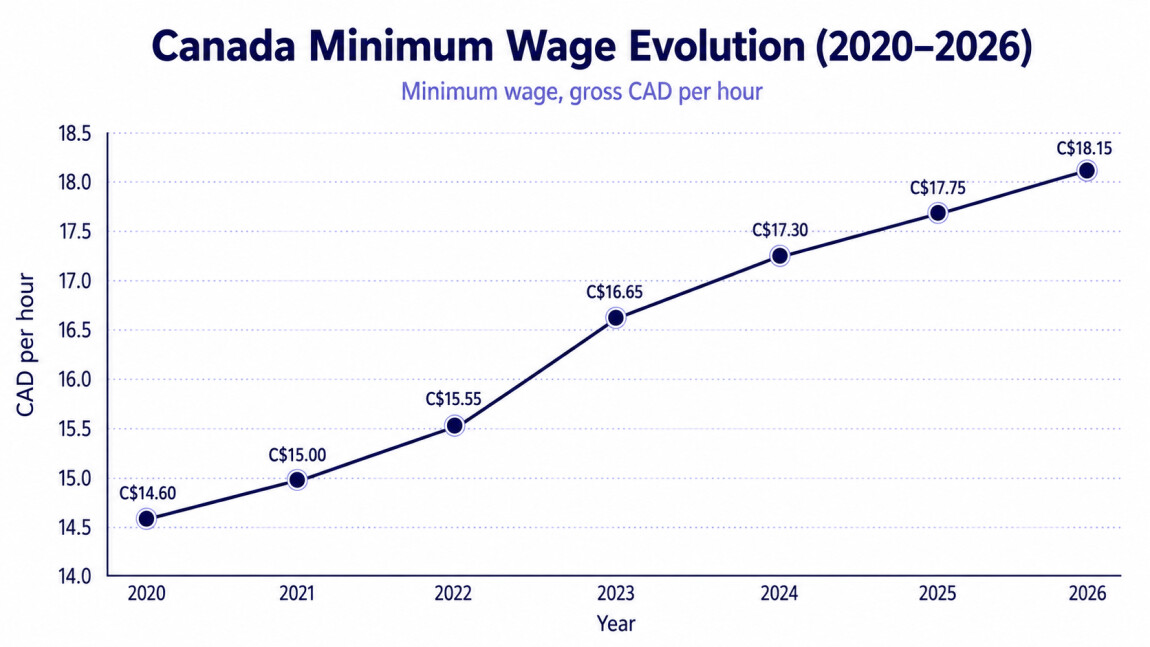
3. Evolution of the Federal Minimum Wage (2022–2026)
Since the re-introduction of a standalone federal floor in 2021, the rate has climbed steadily:
-
2022: C$15.55
-
2023: C$16.65
-
2024: C$17.30
-
2025: C$17.75
-
2026: C$18.15
This represents a cumulative increase of over 21% in just five years, highlighting Canada's commitment to wage adequacy in a volatile global economy.
4. Purchasing Power and the "Living Wage" Gap
While C$18.15 per hour is high by international standards, a growing debate in 2026 focuses on the gap between the Statutory Minimum Wage and the Living Wage. In expensive hubs like Vancouver or Toronto, living wage advocates argue that a single adult needs closer to C$25.00 per hour to cover basic expenses like housing and food. As a result, many Canadian employers are voluntarily joining "Living Wage" programs to attract talent in a tight labor market.
5. Compliance: The "Higher Rate" Rule
A crucial rule for workers and employers in Canada is that if the provincial minimum wage is higher than the federal rate, federally regulated employers in that province must pay the higher of the two. For example, a federal worker in British Columbia must be paid C$18.25 starting June 2026, as the provincial rate exceeds the federal C$18.15.
Conclusions
Canada’s 2026 wage landscape is one of steady, predictable growth. By automating increases based on inflation, Canada has removed much of the political friction found in other countries. For workers, the 2026 rates provide a essential safety net; for the economy, they represent a balancing act between supporting household spending and managing business costs. Ready to take the next step? Create your CV, browse job opportunities, or get ready for your job interview.
FAQ – Frequently Asked Questions
What is the federal minimum wage in Canada for 2026? The rate is C$18.15 per hour, effective April 1, 2026.
Which province has the highest minimum wage in 2026? British Columbia, with a rate of C$18.25 per hour effective June 1, 2026.
Does the minimum wage increase every year in Canada? Yes, most provinces and the federal government have laws that automatically adjust the rate every year (usually in April, June, or October) based on inflation.
What is the minimum wage in Ontario for late 2026? Starting October 1, 2026, the Ontario minimum wage rises to C$17.95 per hour.
Partager
Ce que je lis en vaut la peine :
Article rédigé par :
 wherewework.com

Commentaires
0 commentaire
Aucun commentaire ! Sois le premier à commenter cet article !

Accède à ton compte et ajoute ton commentaire
International


Abonne-toi à la newsletter
Lis des articles d'intérêt rédigés par les contributeurs wherewework.com
