Share
Hussle survey: 70% of UK hybrid workers say their routine is making them more sedentary
09/09/2026
7 min
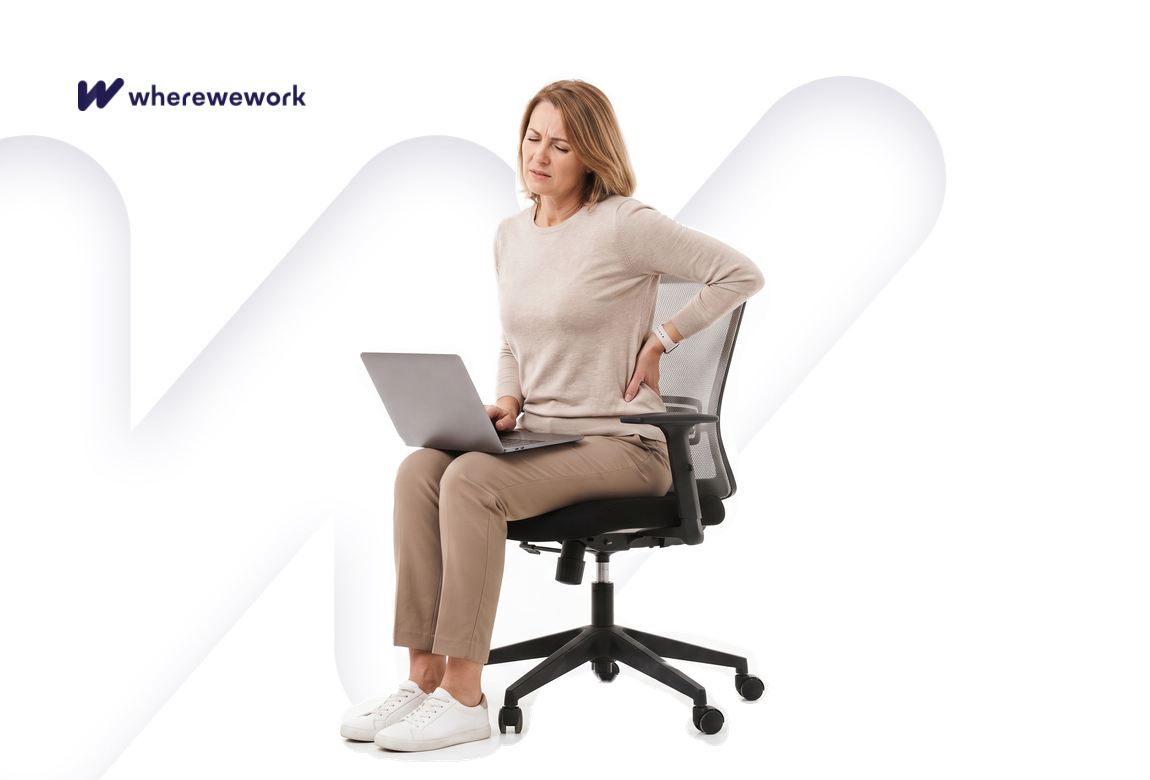
New Hussle research finds that 70% of UK workers say their working routine increases sedentary behaviour, and 62% are worried about the long-term health impact of their job. The numbers land at a moment when hybrid working is no longer an experiment but a settled feature of British professional life, and when the gap between what employers spend on wellbeing and what employees actually use has become impossible to ignore. The problem is not that people have stopped caring about their health. It is that hybrid working has quietly redesigned the working day around prolonged sitting, and most corporate wellbeing programmes were built for a world where everyone was in the same building.
Hussle, which sells flexible gym-access benefits to UK employers, commissioned the research, and that commercial interest is worth flagging upfront. The figures have not been independently replicated. That said, the underlying pattern is consistent with ONS data on hybrid working uptake: the Office for National Statistics has tracked a sustained shift toward hybrid and home-based working across UK industries since 2020, with the proportion of workers reporting a hybrid arrangement remaining significant well into the mid-2020s. The Hussle numbers put a health lens on a structural change that the ONS has already confirmed at scale.
What actually changed when hybrid working became routine
The commute, for all its frustrations, was incidental movement. Walking to the station, standing on the Tube, navigating office stairs, crossing a car park, even the short walk from the kitchen to the meeting room. None of it counted as deliberate exercise, but all of it counted as motion. When hybrid working removed most of that friction, nothing structural moved in to replace it.
A typical home-working day in the UK now often unfolds like this: laptop open at the kitchen table by half eight, back-to-back video calls until midday, a sandwich eaten at the same table, more calls, then a hard stop when the school run begins or the day simply runs out. For many people, the step count before dinner sits below 1,000. The chair has become the workday.
Pauline Alonso, Wellness Expert at Hussle, frames the shift in terms that apply whether someone is in a Manchester flat or a Surrey home office.
Alonso argues that movement can no longer be treated as something that happens separately from work: for many hybrid employees, work is now where a significant proportion of sedentary behaviour occurs, which means employers have a role to play in making movement part of the working culture.
The Health and Safety Executive (HSE) has long held that employers carrying out risk assessments under the Health and Safety at Work etc. Act 1974 must consider the risks of prolonged static posture for display screen equipment users. The Health and Safety (Display Screen Equipment) Regulations 1992 apply to home workstations as much as to office desks, and require employers to assess and reduce risks from screen use. In practice, many hybrid arrangements have outpaced the implementation of those assessments for remote workers.
Why a post-work gym session does not resolve the problem
The instinct, especially among the health-conscious, is to compensate. A lunchtime HIIT class, a Thursday evening run, a longer cycle at the weekend. Physiologically, that instinct only goes so far.
Prolonged, uninterrupted sitting has effects that a single structured workout does not reverse. Circulation slows, glucose regulation weakens, posture compresses, and lower-back and neck strain accumulates across hours rather than sessions. Alonso is direct on this point.
A 45-minute workout does not cancel out an entire day of sitting. Those managing hybrid workforces need to think about the whole working day and identify where they can create natural opportunities for people to stand, walk, and move.
This is what makes the traditional corporate benefits stack look increasingly misaligned. A subsidised gym in a head office helps the employee who is in that office three days a week. For the hybrid majority, it is a benefit that exists on paper and rarely converts into behaviour. The CIPD's annual Reward Management Survey has tracked take-up gaps in employer wellbeing provisions for years, noting that benefits concentrated in physical workplace infrastructure tend to show lower utilisation among remote and hybrid cohorts. ACAS guidance on employee wellbeing similarly stresses that wellbeing provisions should be accessible to all workers regardless of where they perform their duties, not only those with regular site access.
For employees: how to evaluate a role's real wellbeing offer
If you are weighing a job offer or renegotiating your current arrangement, the useful question is not whether the employer has a wellness programme. It is whether that programme reaches you where you actually work.
A few things worth probing before you sign:
- Is the wellbeing benefit portable? A flexible gym pass usable across multiple venues nationwide, a home-equipment allowance, or a monthly stipend you can spend on classes near where you live is materially different from a single on-site facility you might visit twice a year.
- Are meetings designed with movement in mind? Ask whether one-to-ones can be walking calls, whether there are default buffers between back-to-back video meetings, and whether the culture actually permits stepping away from the desk.
- Is there a home-workstation budget? Under the Health and Safety (Display Screen Equipment) Regulations 1992, employers are required to assess and address risks at home workstations. Whether the company actively funds that setup, or leaves it to the individual, tells you something concrete about how they treat remote workers.
- Do managers model healthy working habits? If the team lead is sending Slack messages at 22:00 and never takes a lunch break, the written wellbeing policy will not protect you from the culture.
These questions are fair territory for a job interview. Wellbeing used to feel like a soft topic to raise in a hiring conversation. In a hybrid market where 62% of UK workers are worried about the long-term health impact of their job, asking them signals a candidate who is thinking past the first pay packet. Employers worth working for will have considered the answers.
For HR: the benefits stack is being audited by attrition
If you hold responsibility for people, benefits, or wellbeing at a hybrid-working organisation, the Hussle numbers are less a news story and more a budget review prompt. Two in three of your employees are concerned about what their working day is doing to their health. If the majority of your wellbeing spend still sits in the physical fabric of one building, most of it is not reaching most of your workforce.
The CIPD recommends that HR functions track wellbeing benefit utilisation disaggregated by working pattern. Without that data, it is impossible to know whether your provision is performing or simply sitting idle for the remote cohort. Charles Cotton, Senior Reward Adviser at the CIPD, has highlighted in published commentary that employers who audit benefits uptake by location of work tend to discover utilisation gaps that would otherwise go unnoticed until a retention event prompts the question.
A few structural changes that tend to survive scrutiny:
- Shift from perk to access. Replace or complement the on-site gym with a portable, multi-venue network or a personal wellbeing stipend. Success is measured by utilisation across the hybrid population, not attendance at one postcode.
- Redesign the meeting calendar. Default 25- and 50-minute meetings, a protected lunch slot, and permission to take audio-only calls on foot cost nothing to implement and address the actual mechanism driving sedentary risk.
- Fund the home workstation properly. A one-off ergonomic setup budget is cheaper than months of musculoskeletal absence. The HSE's DSE Regulations 1992 already require a home-workstation assessment; funding the remediation is the logical next step and provides a clear paper trail for any future employer-liability question.
- Measure what you want to change. Track wellbeing benefit uptake by working pattern (fully remote, hybrid, and on-site). If your remote cohort's engagement with the wellbeing offer is a fraction of the on-site cohort's, that gap is the brief for next year's benefits review.
The candidate market is reading the signals faster than many benefits committees. Wellbeing provision that only functions when an employee is physically in the office operates, in practice, as a return-to-office incentive dressed as a benefit. Candidates with options notice. Alonso's framing is worth taking at face value.
The approach needs to move away from one-size-fits-all. The goal should be accessibility: if someone is working from home, they should have just as much opportunity to benefit from workplace wellbeing as someone sitting in the office.
What movement embedded in the working day actually looks like
The redesign Alonso describes is smaller than a wellness campaign and larger than a monthly step-count challenge. It is a deliberate restructuring of the ordinary working hour so that the default state is not sustained stillness.
In practice, that means walking one-to-ones conducted on audio, standing during solo focus blocks, a five-minute buffer between meetings so people can physically leave the chair, a lunch break that is protected by calendar rather than swallowed by a follow-up call, and a benefits budget that follows the employee to wherever they are working. The DSE Regulations 1992 already provide the statutory scaffolding; what most hybrid organisations lack is the operational habit to fill it.
ACAS guidance on managing hybrid workers notes that effective wellbeing support requires proactive employer action, not just the existence of a written policy. The difference between a hybrid organisation that supports physical health and one that merely claims to is largely a question of whether movement is built into the structure of the day or left to individual willpower after hours.
Key takeaways
- 70% of UK workers say their working routine increases sedentary behaviour; 62% are worried about the long-term health impact of their job, per Hussle research. The survey's methodology and sample size have not been independently published, and Hussle has a commercial interest in the finding.
- A single post-work workout does not offset a full sedentary working day. Movement needs to be embedded within working hours, not added on at the end of them.
- The Health and Safety (Display Screen Equipment) Regulations 1992 require employers to assess home workstations. Funding the setup that follows from that assessment is both a legal baseline and a practical wellbeing measure.
- For candidates: portable wellbeing benefits, home-setup budgets, meeting-calendar design, and manager behaviour are now legitimate questions to raise before accepting a hybrid role.
- For HR: on-site-only wellness spend is stranded for the hybrid majority. The CIPD and ACAS both point toward accessibility, disaggregated utilisation tracking, and structural calendar design as the levers most likely to close the gap.
Share
What I read is worth it:
Read all the articles about
Balance Career planning Economic Employee experience Employer branding Ethics Evaluate the company Human behaviour Workforce planning StatisticsArticle written by:
 wherewework.com

Comments
0 comments
No comments! Be the first to comment on this article!

Access your account and add your comment
Balance


Subscribe to the Newsletter
Read articles of interest from wherewework.com contributors
