Share
Steel fabrication's tariff trap: Community union and TULRCA s.188 in focus as UK jobs risk grows
06/29/2026
5 min
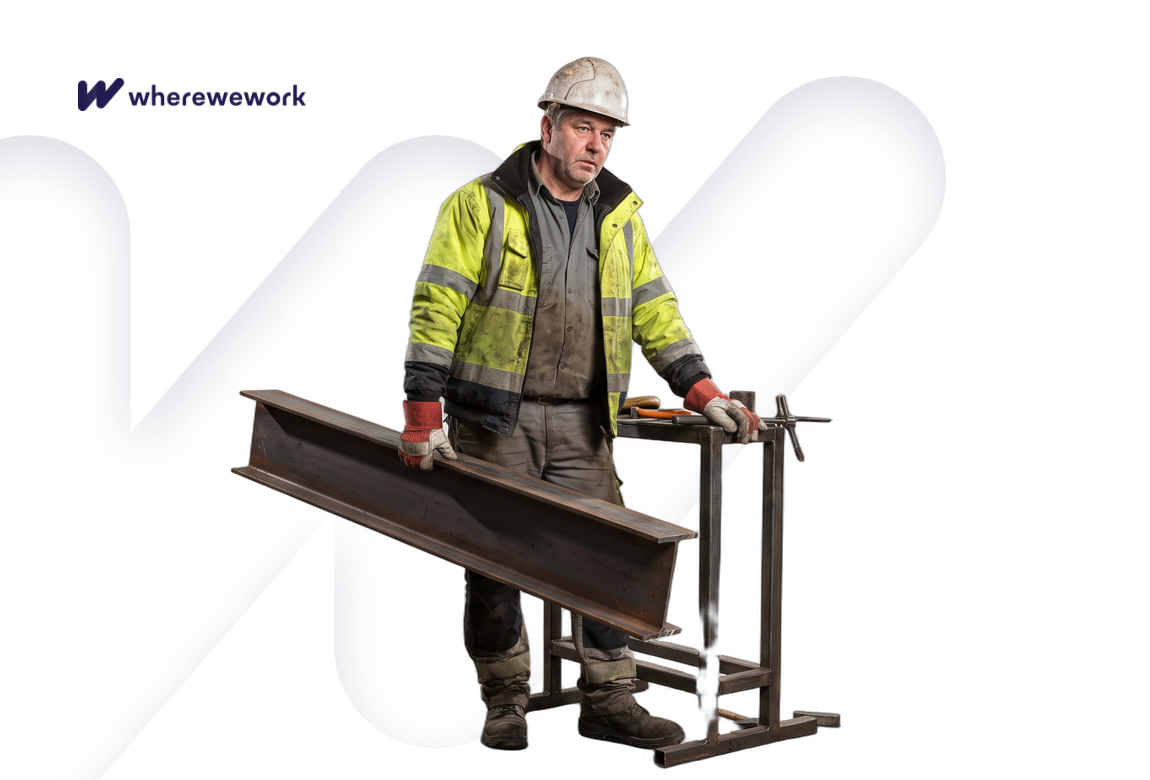
A tariff asymmetry that most fabrication workers have not encountered in a policy briefing is already reshaping order books and staffing conversations across UK steel shops. UK tariffs on raw steel imports have doubled, driving up input costs for domestic fabricators, while finished structural steel arriving from overseas fabrication yards still passes through a significantly lower tariff threshold. The Construction Enquirer reports that ministers have so far declined to close that gap, leaving the higher-value, ready-to-install product at the centre of the competitive squeeze.
The two-tier structure creates a specific kind of commercial problem. A UK shop buys raw steel at the doubled-tariff price, carries UK wages, UK energy bills and UK overheads, then sells finished sections into the same market as an overseas competitor who faced none of the raw-material levy and ships the completed product through the gap. Industry bodies warn that thousands of UK steel fabrication jobs are now exposed, with smaller and mid-size enterprises absorbing the sharpest pressure. Community, the trade union that represents a significant portion of UK metals and steel workers, has flagged concerns about precisely this kind of asymmetric policy outcome in previous rounds of safeguard consultations, and the current gap is likely to draw renewed organising attention from both Community and Unite the Union, which covers manufacturing and fabrication sites across England, Wales and Scotland.
What the tariff gap actually does to a fabrication shop
The competitive arithmetic is straightforward, even if the policy is not. A UK fabricator's cost base is denominated in sterling and shaped by domestic input prices, statutory wage obligations under the National Minimum Wage Act 1998, and energy contracts that cannot be renegotiated overnight. An overseas competitor fabricating to the same structural specification can absorb the same raw-steel price movement very differently, because their total cost base is set in a lower-cost labour market and their finished product reaches UK buyers through the tariff gap. The construction industry has said that the new levies will impose what it describes as punitive costs despite government efforts to soften the blow, with housebuilders signalling that those costs travel down the supply chain.
When a main contractor faces a meaningful price differential between UK-fabricated and imported finished sections, the procurement decision is not primarily about preference for domestic supply. It is a margin call. And in the short term, the line item with the most flexibility inside a UK fabrication shop is labour. That is the mechanic through which a tariff policy question becomes a workforce question.
For employees: what fabricators and construction workers should watch
For workers in UK steel fabrication shops or on construction sites that depend on UK-fabricated structural sections, the next two quarters carry more informational weight than usual. Cost pressure of this shape tends to follow a recognisable sequence before it reaches formal redundancy: overtime allocation is the first variable adjusted, followed by shift consolidation, and then the preliminary conversations about headcount begin. Those signals are not inevitable at any specific shop, but they are worth tracking.
Practical questions worth raising with your employer or workplace representative, calmly and on the record:
- What proportion of the current order book consists of fixed-price contracts agreed before the tariff doubling, and what share allows for repricing?
- Are housebuilder or main-contractor clients indicating they will absorb increased costs, pass them on, or move to imported fabricated sections?
- If headcount reductions are being modelled, what is the proposed consultation timeline, and does the potential scale trigger collective consultation obligations under the Trade Union and Labour Relations (Consolidation) Act 1992 section 188?
TULRCA 1992 s.188 is directly relevant here: where an employer proposes to make 20 or more employees redundant at one establishment within a 90-day period, it is required to begin collective consultation with appropriate representatives at least 30 days before the first dismissal takes effect, rising to 45 days where 100 or more redundancies are proposed. ACAS (the Advisory, Conciliation and Arbitration Service) publishes detailed guidance on what constitutes meaningful consultation under this framework, and workers or their representatives can contact ACAS directly if they believe a process is not being followed correctly.
For skilled fabricators who are beginning to look at the wider jobs market, the structural welding, steel-erection and detailing skill set retains demand on live infrastructure programmes and on retrofit and decarbonisation projects that cannot be offshored. Knowing what workers at comparable shops earn, and how their employers have managed previous cost cycles, converts an anxious quarter into a considered next step.
For HR and shop managers: the workforce decision tree
The tariff gap puts a workforce question in front of every fabrication shop manager that does not resolve cleanly. Retaining the full team through a period of margin compression preserves capability and avoids the legal and reputational exposure of a poorly managed reduction. Trimming headcount early to protect the balance sheet risks leaving the shop short-staffed if the tariff gap closes or order volumes recover faster than anticipated. Both paths carry costs; the relevant question is which direction the order book is moving over the next 60 to 90 days, because that horizon is roughly where retention decisions become practically irreversible.
Three checks worth running this quarter:
- Skill mapping. Welders, fitters and detailers who are genuinely versatile across product types and fabrication methods are the people whose departure would take the longest to recover from if conditions improve within six months. Identify them before the pressure peaks.
- Client diversification. Where the majority of revenue is tied to housebuilders who are already signalling cost pass-through, the workforce risk is concentrated. Infrastructure, energy and retrofit clients tend to behave differently under this tariff structure because their procurement timelines are longer and import substitution is harder.
- Consultation readiness. Regardless of which direction the order book moves, a well-prepared consultation process under TULRCA 1992 s.188 and the Employment Rights Act 1996 costs less, legally and reputationally, than an improvised one. HR teams should have the process mapped before it is needed, and should be aware of ACAS early conciliation as a first step if disputes arise.
The CIPD (Chartered Institute of Personnel and Development) has consistently found in its annual Reward Management surveys that the organisations managing cost shocks with transparent communication retain stronger talent pipelines when conditions recover. Fabrication is a skilled trade with a long recruitment cycle; shops that communicate openly during difficult periods tend to rebuild more quickly than those where information voids leave workers to draw their own conclusions. That observation applies with particular force in regional fabrication clusters where skilled workers know each other across employers.
From an HR compliance standpoint, the Employment Rights Act 1996 governs individual redundancy rights including minimum statutory notice under s.86 and statutory redundancy pay entitlements under s.135. Both apply regardless of the commercial rationale, and neither is reduced by the difficulty of the trading environment. Getting the process right is a floor, not an optional extra.
What to watch next
The policy question is whether ministers move to extend tariff coverage from raw steel to fabricated sections, effectively closing the gap, or allow the asymmetry to persist while trade lobbying continues. Industry coverage suggests the lobbying from UK fabrication trade bodies and from unions including Community and Unite is active and the policy outcome remains unsettled. The ONS (Office for National Statistics) workforce data for manufacturing sub-sectors, and in particular the structural metal products category within the Annual Survey of Hours and Earnings, will be a useful benchmark for tracking whether earnings and employment levels in the fabrication segment shift materially over the next reporting cycle.
For workers and for HR teams, the most useful posture is the same in either scenario: read the order book signals, assess client behaviour over the next two quarters, and open the workforce conversation before external events force it. The decisions that protect jobs in a shop that survives a cost shock, and the decisions that protect workers whose situation becomes untenable, are both made in the period before a policy outcome is certain, not after. Waiting for ministerial clarity before having the conversation with your team or your employer is, in most fabrication shops right now, a choice to start later with less runway.
Share
What I read is worth it:
Read all the articles about
About the crafts Career planning Economic Employee experience HR Metrics Editorial Labour market NegotiationArticle written by:
 wherewework.com

Comments
0 comments
No comments! Be the first to comment on this article!

Access your account and add your comment
About the crafts


Subscribe to the Newsletter
Read articles of interest from wherewework.com contributors
